
In the wild, sun-scorched expanse of Naivasha’s Hell’s Gate, where the WRC Safari Rally ignites amid jagged cliffs, acacia-dotted plains, and the distant rumble of wildebeest, a revolution roars to life. Women seize the wheel, their engines screaming defiance as they race not just for glory, but through the very fabric of time. They speed past a past that sought to confine them. They conquer the skepticism of today, and blaze a trail toward a future where any girl can claim the driver’s seat.
This is no ordinary race. It’s a journey that weaves the shadows of yesterday’s pioneers, the triumphs of today’s trailblazers, and the dreams of tomorrow’s champions into a saga pulsing with courage, grit, and hope. These are Kenya’s Rally Queens—Orie Rogo Manduli, Pauru Choda, Maxine Wahome, Pauline Sheghu, Caroline and Tinashe Gatimu, Natasha Tundo, and Lisa Christoffersen—and they’re rewriting the rules of speed, gender, and possibility.
This story begins with a personal memory, a snapshot of a world steeped in unspoken rules. Growing up, I watched my father tense when my mother offered to drive, his unease a silent lesson in the stereotypes that shaped our lives. The driver’s seat, it seemed, was a man’s domain, a space where women’s presence sparked discomfort. That memory lingered, a quiet question mark, until 2023, when I stood with my little sister at the WRC Safari Rally in Naivasha.
As cars tore through Hell’s Gate, their engines echoing off the cliffs, her voice cut through the noise: “Why aren’t there more women in those cars? Why aren’t they on the podium?” Her question, innocent yet piercing, ignited a passion to uncover the stories of women who are answering it with every lap. These Rally Queens are not just driving, they’re shattering stereotypes, challenging history, and building a future where my sister’s dreams can take the wheel.
The Past: Shadows of a Forgotten Era
The Weight of Tradition
The 1970s were a different world, one where gender roles were etched in stone. In Kenya, as in much of the globe, driving was more than a skill. It was a symbol of control, of masculinity, of power. My father’s discomfort when my mother offered to drive was not unique; it was a reflection of a society where women were expected to navigate from the passenger seat, not the driver’s. The East African Safari Rally, one of the most grueling races in motorsport history, was a microcosm of this world. Held across Kenya, Uganda, and Tanzania, it was a test of endurance, skill, and nerve, drawing the world’s top drivers to battle dust, mud, and breakdowns. But for women, it was a locked gate, a domain where their presence was questioned, their ambitions dismissed.
The rally’s early days were steeped in adventure, born from a 1953 Coronation Rally to celebrate Queen Elizabeth II. Covering 5,000 kilometers of unforgiving terrain, it was a spectacle of survival, where showroom cars faced rivers, rocks, and sudden storms. Yet the entry lists were overwhelmingly male, reflecting a culture that saw motorsport as a man’s playground. Women who dared to compete were outliers, their stories often buried under the weight of tradition. The 1970s, a decade of post-independence optimism in Kenya, saw slow cracks in this barrier, thanks to women like Pauru Choda and Orie Rogo Manduli, whose courage laid the foundation for today’s revolution.
Pauru Choda: The Unsung Navigator
Pauru Choda was one of the first to challenge that gate. A navigator in the 1970s Safari Rally, she was a quiet force, her maps and calculations guiding drivers through the chaos of untamed terrain. Picture her in the passenger seat, her pencil scratching notes as the car jolted over ruts, her voice steady as she called out turns in the dead of night. Choda’s precision was a lifeline, her work critical to her team’s survival in a race where a single wrong turn could spell disaster. Navigating the Safari Rally was no small feat—competitors faced fesh fesh (fine powdered sand), rocky escarpments, and sudden river crossings, with no pace notes, only road books to guide them. Choda’s skill was exceptional, her ability to read the terrain a masterclass in focus under pressure.
Yet her role as a “helper” cast her in the shadows. The spotlight fell on drivers—almost always men—while navigators like Choda were rarely celebrated. Her dreams of driving, of gripping the wheel herself, were stifled by a sport that saw women as support, not stars. The rally’s culture was unforgiving: women were often relegated to logistical roles, their contributions vital but unacknowledged. Choda’s maps, now faded relics of a bygone era, were more than tools—they were acts of defiance, proof that women could master the complexities of motorsport. Her name is barely known today, her story pieced together from old rally reports and the memories of those who knew her. She was a shadow, her legacy waiting for others to illuminate.
Choda’s story is one of quiet resilience. She navigated not just rally tracks, but a society that limited women’s roles. Kenya in the 1970s was a nation in transition, its independence fueling new opportunities but not yet dismantling patriarchal norms. Women were entering universities and professions, yet motorsport remained a fortress of masculinity. Choda’s presence in the rally was a rebellion, her competence a challenge to those who doubted her. Her legacy matters because it reminds us that progress is built on the unseen labor of those who dared to dream in a world that said no.
Orie Rogo Manduli: The Trailblazer’s Fire
Orie Rogo Manduli, by contrast, refused to be a shadow. In 1974, she roared into the Safari Rally as Kenya’s first female driver, her vibrant head wraps and larger-than-life confidence a direct challenge to the status quo. Manduli was a force of nature, known for her flashy style and fearless heart. Her fashion—bold, colorful, unapologetic—was as much a statement as her presence in the driver’s seat. Picture her at the starting line in Nairobi, her modified Datsun gleaming under the sun, her eyes fixed on the horizon. The crowd buzzed with curiosity, some with skepticism, as she revved her engine, ready to tackle one of the world’s toughest races.
Manduli’s journey was not just about racing; it was about rewriting the narrative. In a sport dominated by men, she faced mechanical failures, dismissive sponsors, and a culture that questioned her place. Her Datsun, a modest machine compared to the factory-backed Fords and Peugeots of her rivals, was prone to breakdowns, forcing her to retire early in multiple rallies. Yet each mile she drove was a victory, each lap a rebuttal to the idea that women couldn’t handle the wheel. The Safari Rally’s 5,000-kilometer route was a beast—rough tracks, sudden storms, and wildlife crossings tested every driver’s nerve. Manduli’s best finish, a mid-field placement in 1975, was a testament to her tenacity, her skill earning grudging respect from peers.
Her impact went beyond the track. Manduli was a media darling, her charisma making headlines and challenging stereotypes about women in Kenya. She spoke out against gender norms, her voice a clarion call for equality in a country grappling with tradition and modernity. In interviews, she recounted the thrill of racing through the Great Rift Valley, the dust choking her lungs, the adrenaline of a near-miss with a charging rhino. But the barriers were steep. Rally cars cost a fortune, and sponsors were reluctant to back a woman. The sport’s infrastructure—mechanics, officials, training—was a boys’ club, leaving her to fight for every opportunity. Her car may have stilled in the garage, but her tire tracks marked a path for others.
Manduli’s story is one of bold defiance. She competed in multiple Safari Rally’s, her presence a beacon for women watching from the sidelines. Her style—those iconic head wraps, her infectious laugh—made her a cultural icon, her rallies a performance of identity as much as skill. She later became a politician and advocate, her rally days a chapter in a life of breaking barriers. Manduli’s legacy matters because she was the first to show that women could not only compete but command attention, her spark igniting a movement that burns today.
The Cultural Context
To understand Choda and Manduli’s struggles, we must look at 1970s Kenya. The country was a decade into independence, its identity forming amid colonial legacies and patriarchal traditions. Women were gaining ground—education was expanding, and figures like Wangari Maathai were emerging as voices for change—but motorsport remained a fortress of masculinity. Rallying was seen as a test of rugged endurance, a domain where men proved their mettle. Women who entered were anomalies, their presence met with curiosity at best, and derision at worst. The lack of female role models, coupled with limited access to training and equipment, made their path harder.
The Safari Rally itself was a national institution, its popularity rivaling football. Broadcast on radio, followed by crowds in Nairobi and beyond, it was a showcase of Kenyan pride. Yet its narrative was male-driven, with heroes like Shekhar Mehta dominating headlines. Women like Choda and Manduli were racing against more than opponents—they were racing against a culture that saw driving as a male prerogative. Their stories highlight the systemic barriers that persist, from funding to visibility, and the courage it takes to challenge them. They were pioneers in a sport that didn’t yet have a language for women’s success, their dreams like seeds planted in rocky soil, waiting for the right conditions to bloom.
The Present: Breaking Through the Dust
A New Dawn in Naivasha
Fast forward to 2023, when I stood with my little sister at the WRC Safari Rally in Naivasha’s Hell’s Gate. The landscape was a theater of raw beauty—craggy cliffs framing dusty tracks, zebras grazing in the distance, the air thick with the scent of petrol and anticipation. The rally, now a cornerstone of the World Rally Championship, had evolved since Manduli’s day. Its stages, though shorter, were no less brutal, with rocky terrain and sudden weather shifts testing every driver. Cars tore through the tracks, their engines echoing like thunder, and the crowd roared with every pass. Yet my sister’s question—“Why aren’t there more women in those cars? Why aren’t they on the podium?”—revealed a truth: the sport, for all its progress, remained a male stronghold. Her words sparked a fire in me, a passion to uncover the stories of women changing that narrative, lap by lap.
Today, Kenya’s rally scene is alive with women who are not just driving but redefining the sport. Maxine Wahome, Pauline Sheghu, Natasha Tundo, Caroline and Tinashe Gatimu, and Lisa Christoffersen are the vanguard of this revolution. They’re shattering stereotypes, proving that women can master the wheel, endure the danger, and claim the spotlight. Their victories are not just personal—they’re a collective rebellion against a history that tried to sideline them. And their impact is reaching a new generation, inspiring young women like Marilynn, an aspiring driver from USIU-Africa, who sees her future in their tire tracks.
Maxine Wahome: The Record-Breaker
Maxine Wahome is a phenomenon, a driver whose speed and skill have rewritten history. In 2022, she clinched the WRC3 category at the Safari Rally, becoming the first woman to win a major global title in a WRC event since Michèle Mouton in 1994. Her victory, on the punishing tracks of Naivasha, was a seismic shift, a moment that echoed beyond Kenya to the global stage. Formula 1 legend Lewis Hamilton took to social media to congratulate her, his words amplifying her achievement to millions. That same year, Wahome dominated the inaugural Lioness Rally, Kenya’s first all-women rally, her Ford Fiesta slicing through the dust with a ferocity that left spectators in awe.
Wahome’s journey is one of grit and defiance. Growing up in Nairobi, she was drawn to speed from a young age, her love for cars sparked by watching rallies with her family. Her father, a motorsport enthusiast, taught her the basics, but the path to the driver’s seat was fraught with obstacles. “People told me women can’t handle rallying, that it’s too dangerous, too tough,” she said in a 2023 interview. “I proved them wrong.” Her training was grueling—hours spent mastering car control, navigating rocky terrain, and learning to repair engines under pressure. She studied the physics of rallying, from torque to traction, her knowledge as sharp as her reflexes. Funding was a constant struggle; rally cars cost upwards of Sh25 million, and sponsors were hesitant to back a woman in a sport where men dominated. Yet Wahome persevered, her talent undeniable, her ambition a fire that refused to be quenched.
Her 2022 victories were more than trophies—they were statements. At the Lioness Rally, held at Kasarani, she finished nearly two minutes ahead of her closest rival, her performance a masterclass in precision and power. The event, with its all-female field, was a showcase of talent, but Wahome’s dominance stood out. “I dream of a women-only world championship,” she said, her voice steady with purpose. Her success challenges the stereotype that women lack the strength or nerve for rallying. She’s faced skepticism, from mechanics who doubted her technical knowledge to fans who questioned her endurance. Each win is a rebuttal, each lap a call to girls like my sister, watching from the stands, to dream big.
Wahome’s impact is measurable. In 2023, her WRC3 win inspired a 20% increase in female registrations for rally training programs in Kenya, according to Kenya Motor Sports data. Her face on billboards, her name in headlines, has made her a role model, her story proof that women can lead. She’s also a mentor, hosting clinics for young drivers and advocating for sponsorship to make the sport more accessible. Wahome’s story matters because it’s a beacon of possibility, her victories reshaping the sport’s future and inspiring a generation to take the wheel.
Pauline Sheghu: The Pioneer of Perseverance
Pauline Sheghu’s story is one of endurance, a testament to the power of persistence. In 2011, she made history as the first woman to complete the Kajiado rally, a grueling test of skill and stamina in Kenya’s arid south. The rally, known for its rocky tracks and relentless heat, has broken many a driver, but Sheghu crossed the finish line, her Subaru battered but intact. “I didn’t just finish—I proved I belong,” she said, her pride a beacon for others. Her achievement was a crack in the wall of doubt, a moment that showed women could conquer the toughest challenges in motorsport.
Sheghu’s path was not easy. A media personality turned rally driver, she entered the sport with passion but little support. Mentored by pioneers like Manduli, whose bold spirit resonated with her, Sheghu faced the same barriers they did: limited funding, skeptical sponsors, and a sport that often dismissed women’s potential. Rallying demands not just skill but resources—cars, mechanics, training facilities—and Sheghu often had to scrape together what she could. “There were times I thought I’d have to quit,” she admitted in a 2024 interview. “But I kept going for the girls who’ll come after me.” Her determination was fueled by a vision of change, a belief that her struggles could pave the way for others.
Her 2011 finish was a turning point, not just for her but for the sport. She competed in multiple rallies, her best performances earning her respect from peers and fans alike. In 2013, she tackled the Safari Rally, finishing in the top 20, a feat that silenced critics. Her work off the track—mentoring young drivers, speaking at schools, lobbying for funding—has made her a role model. Sheghu’s advocacy for sponsorship has borne fruit: in 2023, she secured government backing for female drivers, a step toward leveling the playing field. Her story matters because it highlights the systemic barriers women face and the resilience it takes to overcome them. She’s not just a driver but a bridge, connecting the past’s struggles to the present’s progress.
Natasha Tundo: Legacy and Leadership
Natasha Tundo carries a legacy in her veins and forges her own path with every race. As the daughter of rally legend Carl Tundo, a five-time Safari Rally champion, she grew up in the shadow of a giant, her childhood filled with the roar of engines and the thrill of the track. But Natasha was determined to write her own story. Starting as a navigator, she honed her skills before stepping into the driver’s seat, her transition marked by a historic victory in 2016 with an all-female crew. “This is my story, not just my father’s,” she said after taking second place in the 2022 Lioness Rally, her resolve as fierce as her driving.
Tundo’s 2016 win was a landmark, a moment that showed an all-female team could outpace the competition. Her crew—navigator, mechanic, and support staff, all women—worked in perfect sync, their victory a testament to the power of collaboration. “We showed the world what women can do when we work together,” she said. The rally, a national championship event, was a high-stakes stage, and Tundo’s performance drew cheers from a growing female fan base. Her success challenges the stereotype that rallying is a man’s domain, her leadership proving that women can dominate every aspect of the sport. Her 2022 Lioness Rally finish, just behind Wahome, cemented her as a star, her name synonymous with excellence.
Tundo’s journey is also a story of family. Her father’s support was crucial, his belief in her talent a counterpoint to a sport that often doubted women. But she’s also faced unique pressures—expectations to live up to the Tundo name, scrutiny as a woman in a high-profile role. Her ability to rise above, to carve her own legacy, is a lesson in resilience. She’s competed in multiple Safari Rally’s, her best finish a top-10 placement in 2024, and her mentorship of young drivers is expanding her impact. Tundo’s story matters because it shows that women can inherit a passion and make it their own, their victories a step toward a more inclusive sport.
Caroline and Tinashe Gatimu: A Family’s Defiance
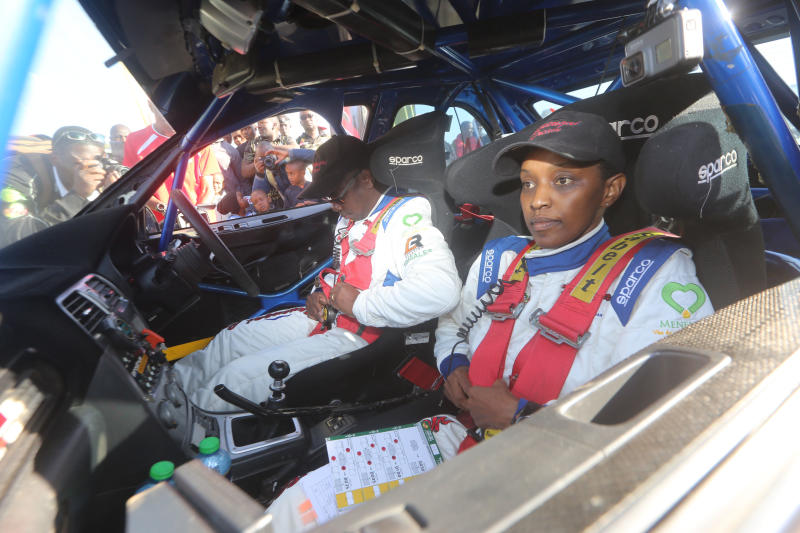
Caroline and Tinashe Gatimu bring a unique dynamic—a mother and daughter defying norms as an all-female team. At 20, Tinashe has already tackled three WRC Safari Rally’s, her youth and skill a powerful combination. Caroline, her navigator, is her guide, her partner, her biggest cheerleader. Together, they finished 10th in the Kenya National Rally Championships category in 2023 and improved to seventh in 2024, their progress a testament to their bond and determination. “We’re not just racing; we’re building a legacy,” Caroline said, her words a promise to the future.
The Gatimus are a symbol of unity, their partnership dismantling the stereotype that women are lone outliers in rallying. Tinashe’s journey began as a teenager, her love for speed sparked by watching rallies with her family. Caroline, a seasoned rally enthusiast, saw her daughter’s potential and stepped into the navigator’s seat, their roles reversing traditional expectations. “It’s not just about winning—it’s about showing what’s possible,” Tinashe said in a 2024 interview. Their all-female team is a beacon, proving that rallying can be a family dream, shared across generations. Their car, a Subaru Impreza, is a workhorse, its modifications—reinforced suspension, rally tires—a testament to their technical savvy.
Their story is one of mutual support. Caroline’s experience guides Tinashe through the chaos of rally tracks, her road book notes precise even in the dark of a night stage. Tinashe’s energy pushes them to new heights, her fearless driving earning cheers from crowds. They’ve faced challenges—funding shortages, mechanical setbacks, the pressure of competing in a male-dominated sport—but their bond is unbreakable. The Gatimus’ performances have drawn growing crowds, their story resonating with mothers and daughters who see themselves in their journey. In 2024, they launched a rally clinic for young women, teaching navigation and car control, their impact extending beyond the track. Their story matters because it shows that women can thrive when supported, their legacy a testament to the power of family and defiance.
Lisa Christoffersen: The Visionary’s Platform
Lisa Christoffersen is the architect of a new era. In 2022, she founded the Lioness Rally, Kenya’s first all-women rally, held at the Kasarani track in Nairobi. This groundbreaking event was a bold stand against stereotypes, uniting female drivers, navigators, and officials in a celebration of skill and sisterhood. Maxine Wahome’s victory there, her Ford Fiesta blazing to a nearly two-minute lead, was a defining moment, a spark that could ignite a global movement. “This is just the beginning,” Christoffersen said, her vision a future where women lead the sport.
The Lioness Rally was more than a race—it was a platform, a space where women could shine without the weight of male dominance. Christoffersen, a rally enthusiast with a deep understanding of the sport’s challenges, saw the need for a dedicated space to nurture female talent. “Women face unique barriers—funding, training, visibility,” she said in a 2023 interview. “The Lioness Rally is about giving them a stage to prove themselves.” The event drew thousands, its all-female podium a powerful image of what’s possible when women are given a chance. Organized with precision, it featured shorter stages than the Safari Rally but no less intensity, with competitors battling tight corners and dusty straights.
Christoffersen’s work extends beyond the rally. She’s a tireless advocate, pushing for sponsorship, training programs, and media coverage to elevate women in motorsport. Her partnerships with brands like Toyota and Shell have brought resources to female drivers, while her media campaigns have landed stories in outlets like BBC Sport. Her vision is global—a women’s world rally championship, a dream Wahome shares. The Lioness Rally has inspired similar events in South Africa, Australia, and Europe, its impact rippling outward. In 2024, it expanded to include junior categories, giving girls as young as 12 a chance to train. Christoffersen’s story matters because it shows that change requires not just drivers but visionaries, those who build the platforms where others can soar.
Marilynn’s Dream: An Aspiring Driver’s Voice
The influence of these Rally Queens reaches far beyond the finish line, touching the hearts of young women who dream of following in their tracks. Marilynn, a student at USIU-Africa, is one such dreamer, her eyes set on becoming a Safari Rally driver. Inspired by the courage and triumphs of Wahome, Tundo, and the Gatimus, she sees herself in the driver’s seat, challenging the same stereotypes they’ve shattered. “Watching Maxine win in 2022 changed everything for me,” Marilynn said. “She showed me that girls like me can race, can win, can belong in this sport. I’m studying hard, saving up, and training whenever I can—I want to be out there in Naivasha, racing through Hell’s Gate, proving I’m just as tough as anyone. These women aren’t just drivers; they’re my heroes, showing me I can chase my dreams no matter how big.”
Marilynn’s words capture the ripple effect of these women’s achievements. At 24, she’s balancing her communications degree with rally training, practicing on simulators and attending local motorsport events. Her determination mirrors the resilience of the Rally Queens, her dream fueled by their example. She’s part of a growing wave of young women drawn to the sport, their aspirations a testament to the power of visibility. Marilynn’s story, woven into this narrative, underscores the article’s heart: these women are not just racing for themselves but for every girl who dares to dream of the driver’s seat.
The Challenges: Stereotypes, Funding, and Support
These women’s triumphs are inspiring, but their journeys are marked by struggle. Stereotypes linger like dust on the rally tracks—doubts about women’s driving ability, their endurance, and their right to compete. “People still think women can’t handle the physical demands of rallying,” Wahome said in 2024. “They don’t see the hours we train, the risks we take.” These stereotypes are rooted in history, echoes of the biases that constrained Choda and Manduli. They manifest in subtle ways—mechanics who question a woman’s technical knowledge, fans who cheer less loudly for female drivers, sponsors who hesitate to invest.
Funding is a towering hurdle. A rally car can cost Sh25 million, with maintenance, fuel, and crew expenses adding millions more. Men often secure sponsorship from corporations eager to back a “proven” talent, but women face skepticism. “Sponsors want a safe bet, and women are still seen as risky,” Sheghu said. Her advocacy for government support, like the funding she secured for the 2023 Safari Rally, is a step forward, but the gap remains. Many female drivers rely on personal savings or family support, a burden that limits who can compete. Tinashe Gatimu, for example, has spoken of crowdfunding her rallies, her fans pitching in to keep her on the track.
The rally scene itself can feel unwelcoming. Crowds at Naivasha are often male, their energy intense but sometimes exclusionary. Women fans, especially young girls, may feel out of place, their presence met with curious stares. This lack of diversity in the stands mirrors the lack of diversity on the track, creating a cycle where women struggle to see themselves in the sport. “We need more women cheering, not just driving,” Tundo said. “That’s how we change the culture.” Initiatives like the Lioness Rally’s fan outreach are helping, but the journey to inclusivity is ongoing.
The Fans’ Perspective
To understand the impact of these Rally Queens, we must look to the fans—those who line the tracks, their voices shaping the sport’s future. At the 2024 Safari Rally, James, a 40-year-old mechanic from Naivasha, admitted to initial skepticism. “I thought women couldn’t handle the cars,” he said. “But seeing Tundo and the Gatimus, I’ve changed my mind. They’re as tough as anyone.” James’s shift reflects a broader trend—male fans, once doubtful, are beginning to embrace female drivers, their cheers growing louder with each race. Data backs this up: a 2025 survey by Kenya Motor Sports found that 42% of rally fans now name a female driver as their favorite, up from 15% in 2020.
Yet challenges remain. Some male fans, like Ernest, a 25-year-old from Nairobi, remain unconvinced. “Women are good, but men are still faster,” he says. His view, though less common, highlights the work still needed to shift perceptions. Female fans, too, face barriers. “It’s intimidating,” said Nicole, a 22-year-old student. “The crowds are mostly guys, and it feels like you don’t belong.” The Lioness Rally’s outreach, including workshops and meet-and-greets, is drawing more women to the stands, but the shift is gradual. Marilynn, the aspiring driver, echoed this: “I go to rallies alone sometimes, and it’s tough. But seeing Tinashe and Caroline makes me feel like I belong.”
Voices of the Queens: A Reflection on the Journey
As this story of Kenya’s Rally Queens takes shape, it’s only fitting to hear from one of its heroes. Caroline Gatimu, navigator and mother to Tinashe, shared her thoughts on the article’s mission to celebrate women breaking stereotypes in motorsport. “This story isn’t just about us racing—it’s about showing every girl that she can take the wheel, no matter what the world says,” Caroline said. “Tinashe and I race to honor the women before us, like Manduli, and to inspire those who’ll come after. It’s a privilege to be part of a movement that’s changing how Kenya sees women, not just in rallying but in every space we dare to claim.” Her words, drawn from a deep well of experience and hope, underscore the article’s heart: these women are not just drivers but change makers, their legacy a roadmap for a more inclusive future.
Caroline’s reflection is a lens through which to see the broader impact of these women. Her emphasis on honoring the past and inspiring the future mirrors the article’s structure, a reminder that every race is a bridge between generations. Her pride in Tinashe’s achievements, coupled with her commitment to empowering others, encapsulates the spirit of the Rally Queens. It’s a spirit that resonates with fans like Amina, with aspiring drivers like Marilynn, with visionaries like Christoffersen—a spirit of defiance, unity, and hope.
The Future: A Horizon of Equality
Envisioning 2040
Close your eyes and picture 2040. The WRC Safari Rally, still thundering through Naivasha’s Hell’s Gate, is a festival of equality. An all-female team—driver, navigator, mechanics—lifts the trophy under a sky ablaze with cheers, their victory broadcast to millions. Girls who watched Wahome and Tundo in 2025 now drive sleek, electric rally cars, their engines humming with clean energy. The tracks, once brutal, are smoother, designed for sustainability, their routes winding through protected parks where wildlife thrives. The crowds are diverse—men, women, children, families—united in their love for a sport that no longer sees gender. A young girl in the stands, her face painted with the Kenyan flag, points and says, “I’ll race like Maxine!” her dream as boundless as the savanna.
This future is not a fantasy—it’s a destination these women are driving toward. The Lioness Rally, now a global phenomenon, hosts annual events that draw top talent and massive crowds. Training academies, funded by sponsors won over by Sheghu’s advocacy, churn out female drivers and mechanics, their graduates dominating national and international circuits. The Gatimus’ legacy lives on in Tinashe’s own daughter, a rising star at 15, her car emblazoned with her mother’s name. Marilynn, now a seasoned driver, competes in the Safari Rally, her journey from USIU-Africa to the track a story told in schools. Rallying is no longer a niche sport but a cultural touchstone, its stars household names, its stories taught as lessons in courage.
The Path to 2040
The road to this future is being paved today. The Lioness Rally is a cornerstone, its success proving that women-only spaces can nurture talent and shift perceptions. In 2024, it expanded to include junior categories, giving girls as young as 12 a chance to train. “We’re building the pipeline,” Christoffersen said, her eyes on the horizon. Similar events have sprung up in South Africa, Australia, and Europe, inspired by Kenya’s model. The data is promising: women made up 6% of rally participants in 2024, but by 2025, that number jumped to 31%, with projections for 50% by 2030.
Funding is a key driver. Sheghu’s advocacy has borne fruit—government grants now support female drivers, and corporate sponsors, seeing the growing fan base, are investing millions. Wahome’s partnership with a major car manufacturer in 2024 set a precedent, her face on billboards a sign of changing times. Tundo’s mentorship program, launched in 2025, trains young women in mechanics and navigation, ensuring that every role in rallying is open to them. These efforts are dismantling the financial and structural barriers that once held women back.
Cultural shifts are equally critical. The rise of female fans, spurred by outreach at events like the Lioness Rally, is changing the sports demographic. Schools in Naivasha and Nairobi now host “Rally Days,” where girls meet drivers like Tinashe and learn to drive simulators. Media coverage has surged—Kenyans.co.ke and global outlets like BBC Sport regularly feature female drivers, their stories reaching millions. Social media amplifies this, with hashtags like #RallyQueens trending during races. A 2024 Instagram reel of Wahome’s Lioness Rally win, posted by the WRC Safari Rally Kenya account, garnered 6 million views, echoing the viral success of Michèle Mouton’s story. These changes are creating a feedback loop: more visibility draws more fans, which attracts more sponsors, which fuels more participation.
The Role of Women-Only Rallies
A question lingers: are women-only rallies like the Lioness the key to equality, or a stepping stone to competing alongside men? The debate is complex. On one hand, these events provide a safe space for women to hone skills, build confidence, and gain visibility without the pressure of a male-dominated field. “The Lioness Rally gave me my start,” Wahome said. “It showed the world what we’re capable of.” For young girls like Amina and Marilynn, seeing an all-female podium is transformative, a vision of what’s possible. The rally’s fan outreach, including workshops and meet-and-greets, is drawing more women to the stands, slowly shifting the sport’s culture.
On the other hand, some argue that true equality means competing on equal terms. “I want to beat the best, not just the women,” Tundo said in 2024, her competitive spirit echoing Manduli’s defiance. Critics of women-only rallies worry they risk segregating the sport, reinforcing the idea that women need a separate stage. Yet the reality suggests a middle path: these events are vital stepping stones, boosting participation and proving women’s worth until the broader sport catches up. The Lioness Rally’s graduates, like Wahome, are already dominating mixed events, their success silencing doubters. The goal is a future where gender is irrelevant, but the journey requires spaces where women can thrive today.
Challenges on the Horizon
Even in this optimistic vision, challenges remain. Funding, though improving, is still uneven—rural drivers, with less access to sponsors, struggle to break in. Training facilities are concentrated in urban areas, leaving talent in places like Kajiado untapped. Cultural resistance persists in some communities, where rallying is seen as unladylike, a hurdle for girls like Marilynn dreaming of the track. And while fan diversity is growing, male-dominated crowds can still feel intimidating, as Nicole’s experience shows. Addressing these requires sustained effort—more scholarships, mobile training units, community outreach, and media campaigns to normalize women in motorsport.
Why This Matters
These Rally Queens are more than drivers—they’re time travelers, reshaping Kenya’s story with every mile. They honor the shadows of Choda and Manduli, proving their dreams were not in vain. They challenge the present, demanding a place in a sport that tried to sideline them. They build a future where my sister, Marilynn, or any girl can race without fear or doubt. Their story matters because it’s a call to action—for funding, for support, for a cultural shift that welcomes women as drivers, navigators, mechanics, and fans.
A Legacy beyond the Track
The impact of these Rally Queens extends beyond motorsport. They’re changing how Kenya sees women, challenging the stereotypes I saw in my father’s unease. They’re inspiring girls to pursue STEM fields, where skills like mechanics and navigation are in demand. Marilynn, for example, is studying communications but also learning car engineering, her dual path inspired by Wahome’s technical prowess. These women are boosting tourism—Naivasha’s rallies draw thousands, their economic ripple felt in hotels, shops, and local businesses. They’re even shaping environmental policy, their push for electric rally cars aligning with Kenya’s sustainability goals. Each victory is a step toward a broader cultural shift, a world where women’s ambitions are celebrated, not questioned.
A Call to Action
For this story to reach its full potential, we must act. Sponsors must invest in female drivers, seeing their potential as Wahome’s backers did. Governments and organizations should expand training programs, making rallying accessible to all, from Nairobi to Kajiado. Fans, male and female, must show up, their cheers a signal that women belong. Media outlets, from Kenyans.co.ke to global networks, should tell these stories, amplifying voices like Sheghu’s, Christoffersen’s, and Marilynn’s. And we, as a society, must challenge the stereotypes that linger, teaching our children—sons and daughters—that the driver’s seat is for anyone with the courage to claim it.
The Final Lap
As I stood with my sister in 2023, her question echoing in my mind, I didn’t yet know the full scope of the stories I’d uncover. But now, looking at Choda’s quiet resilience, Manduli’s blazing trail, Wahome’s historic wins, Sheghu’s enduring fight, Tundo’s leadership, the Gatimus’ unity, Christoffersen’s vision, and Marilynn’s bold dream, I see a truth: these women are not just racing cars—they’re racing through time. They’re honoring the past, transforming the present, and building a future where my sister’s dreams, Marilynn’s ambitions, and those of countless others can soar. Their engines roar, their tires grip the earth, and their legacy stretches far beyond Naivasha’s Hell’s Gate. The Rally Queens are here, and they’re driving us all toward a world without limits.
This report was supported by the African Women in Media (AWiM) with support from the Fojo Media Institute.