
On the second day of AWiM25, Friday, December 5, 2025, the African Union Commission (AUC) headquarters came alive long before the sun rose over Addis Ababa. Delegates streamed through the Main Gate once more, but with a different kind of energy. Less of Day One’s anticipation, more of Day Two’s clarity.
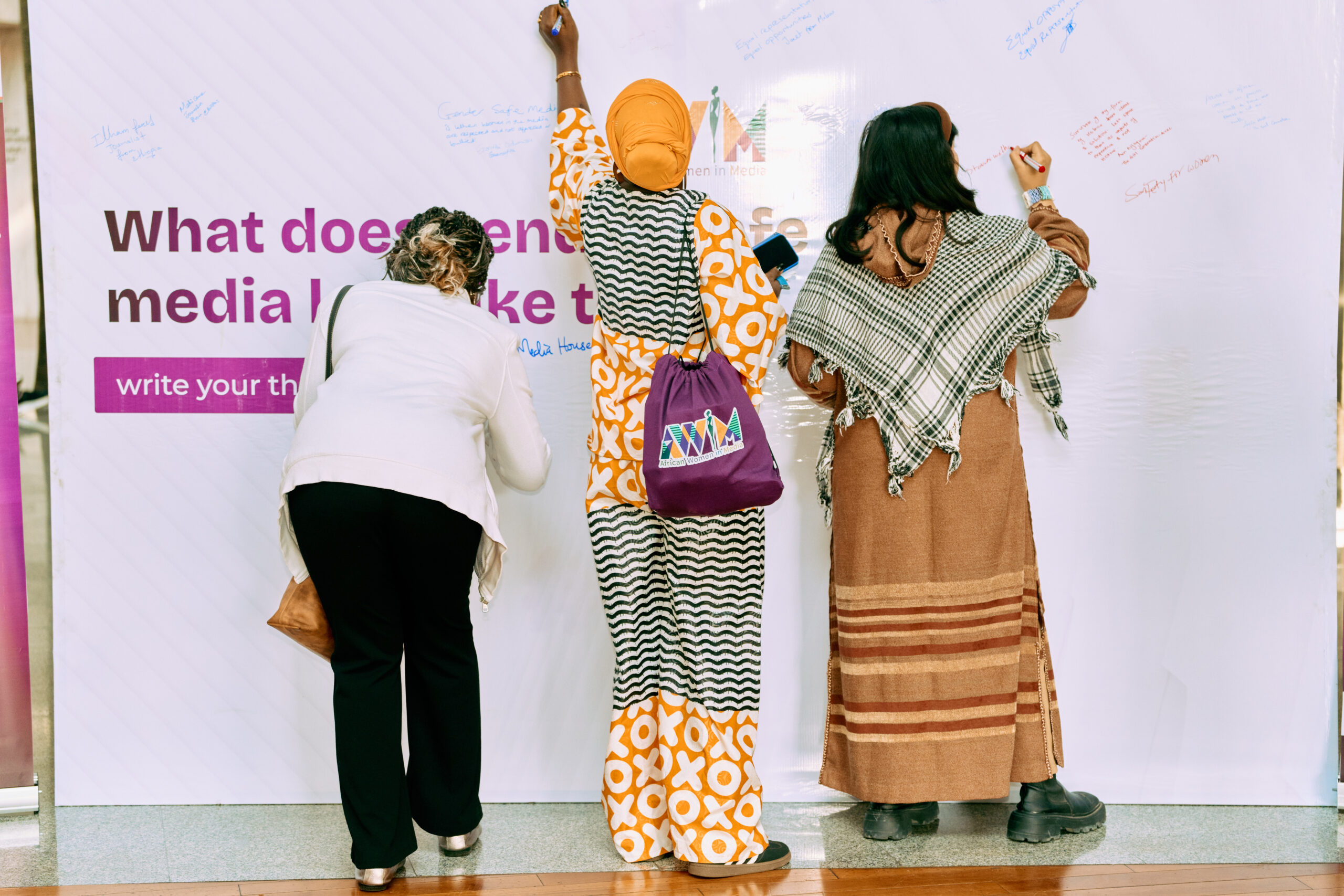
The issues at hand would turn from abstract discussions to a blueprint in motion, with only one question left. “How will we carry this forward?”
In AUC’s Plenary Hall 1, the day opened at 8:30 am EAT with the launch of UNESCO’s World Trends Report, read by a representative of the Director, Rita Bissoonauth. This was followed by a panel session moderated by Dr Phathiswa Magopeni. The hall felt almost reverent as Sweden’s Deputy Ambassador Johan Romare offered opening remarks that reminded delegates of the global momentum (and backsliding) surrounding gender and media freedoms and the need for new solutions.
“2012 was the peak of freedom of expression in the world, but it has declined by 10% since then, driven by increased media suppression in 85% of the world. For the first time in 20 years, authoritarian regimes outnumber democracies, 72% of the world’s population now lives under authoritarian rule.” — UNESCO 2025 Report.
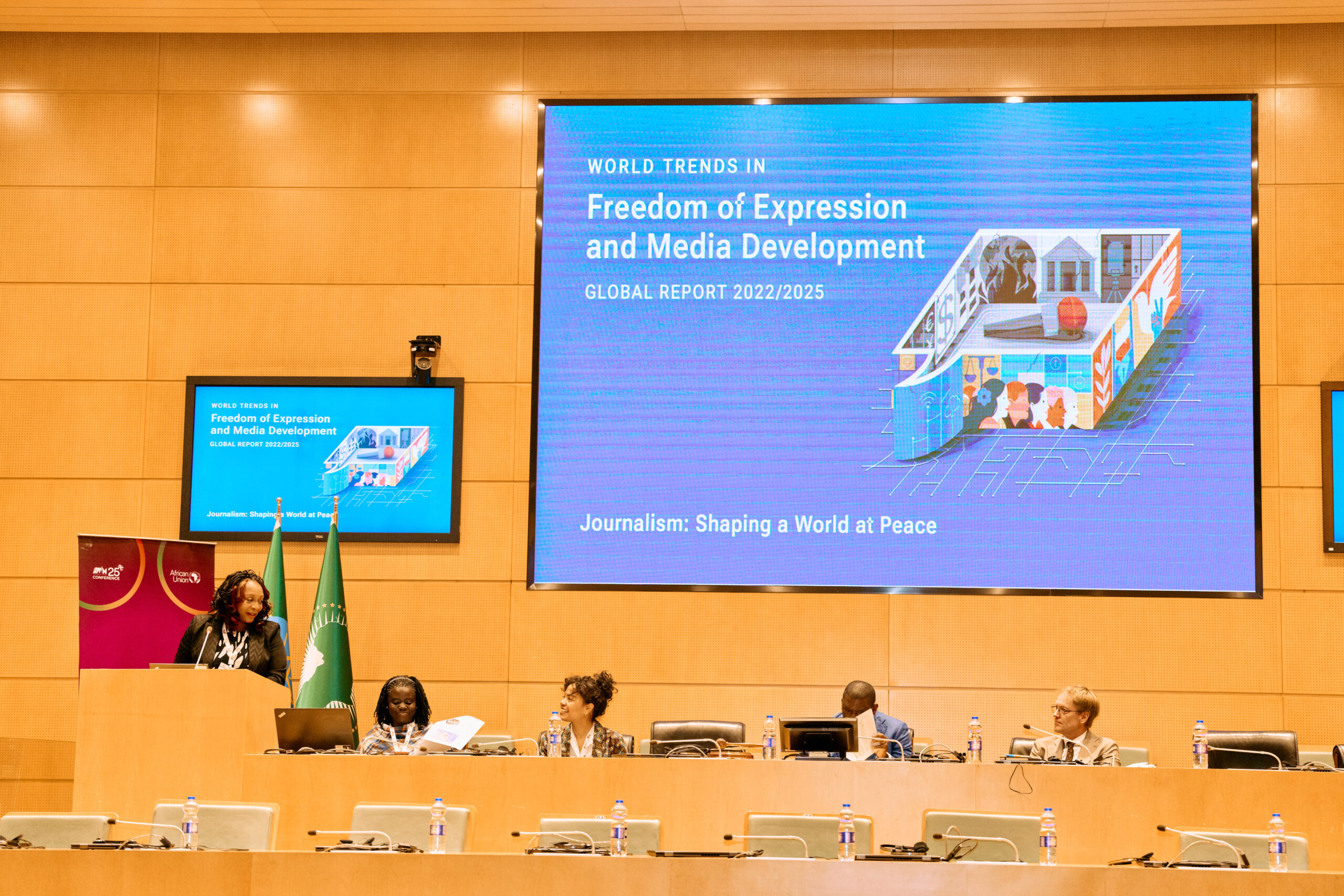
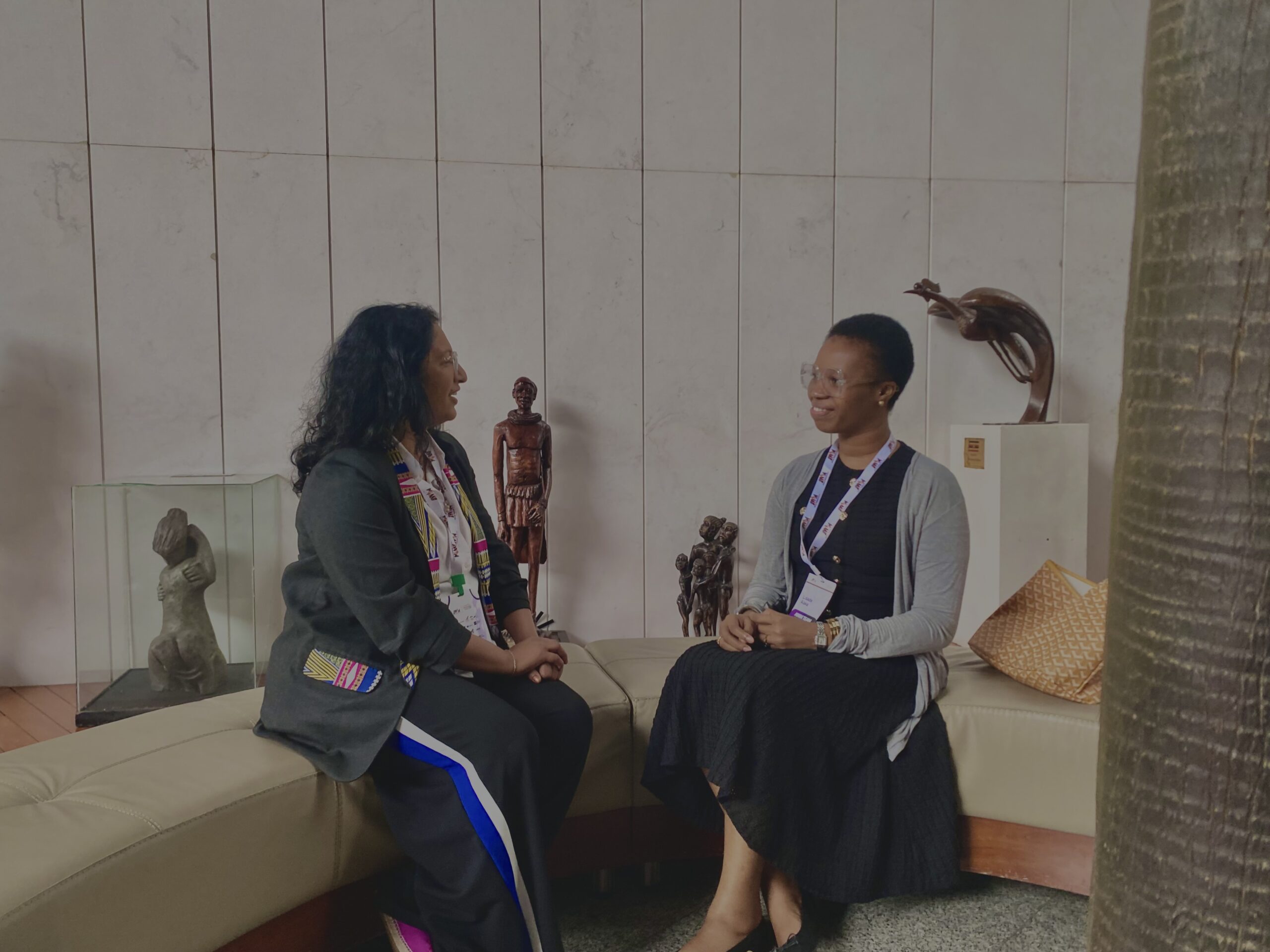
H.E. Ourveena Geereesha Topsy-Sonoo and Rokhaya Diallo drew a sobering line between trending data and lived realities. A short break followed, but the weight of the conversation lingered. Delegates huddled in corners, scribbling notes, trading insights, already stitching the findings into their own work.
Soon, the morning split into parallel sessions, each one demanding a different kind of intellectual rigour. In Conference Hall 3, the workshop on Integrating African Union Policy Frameworks into Media Content became a fireside chat on how to translate continental policy into storytelling that ordinary citizens can recognise themselves in. It was titled ‘30 years post-Beijing, Women in Media and Feminist Storytelling’. Moderated by Toun Okewale Sonaiya, with Erelu Bisi Adeleye-Fayemi, former First Lady of Ekiti State, as the main speaker, grounded the conversation in practical realities.
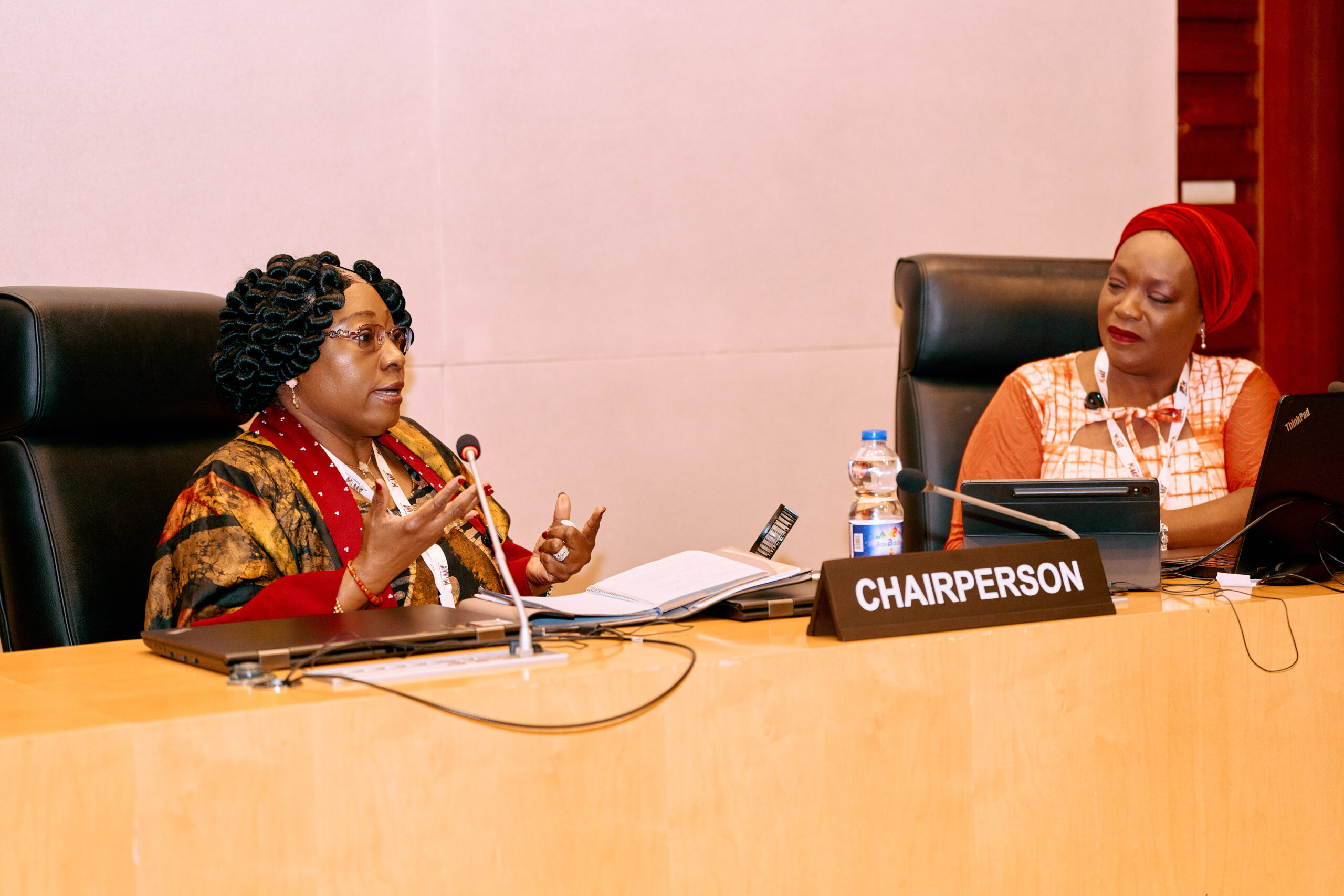
Erelu began answering the question of her journey from Beijing 1995 till now. On the question of what has changed since then, she noted that women in policy bodies have moved from being an add-on to being integral parts of policy-making, citing the Kigali Declaration. The biggest challenge, however, has been to move from policy to implementation. She submitted that everyone ought to do their own part, wherever they are.
Across the building, in the mezzanine Caucus Room 15, Yemisi ‘Shafe Adefolaju led From Margin to Mainstream, a session that became an intimate, sometimes emotional exploration of how advocacy storytelling for girls’ rights can avoid falling into tropes that invisibilise the girls themselves.
Meanwhile, the plenary panel on Safer Digital Media for Women Journalists in Anglo and Francophone Africa took a harder, sharper tone. Moderated by Brenda Namata, the session drew a clear line between digital harassment and democratic backsliding. Speakers like Avis Momeni and Adeng Mayik did not soften their words: “We cannot talk about freedom of expression when half the sector fears opening their inbox.”
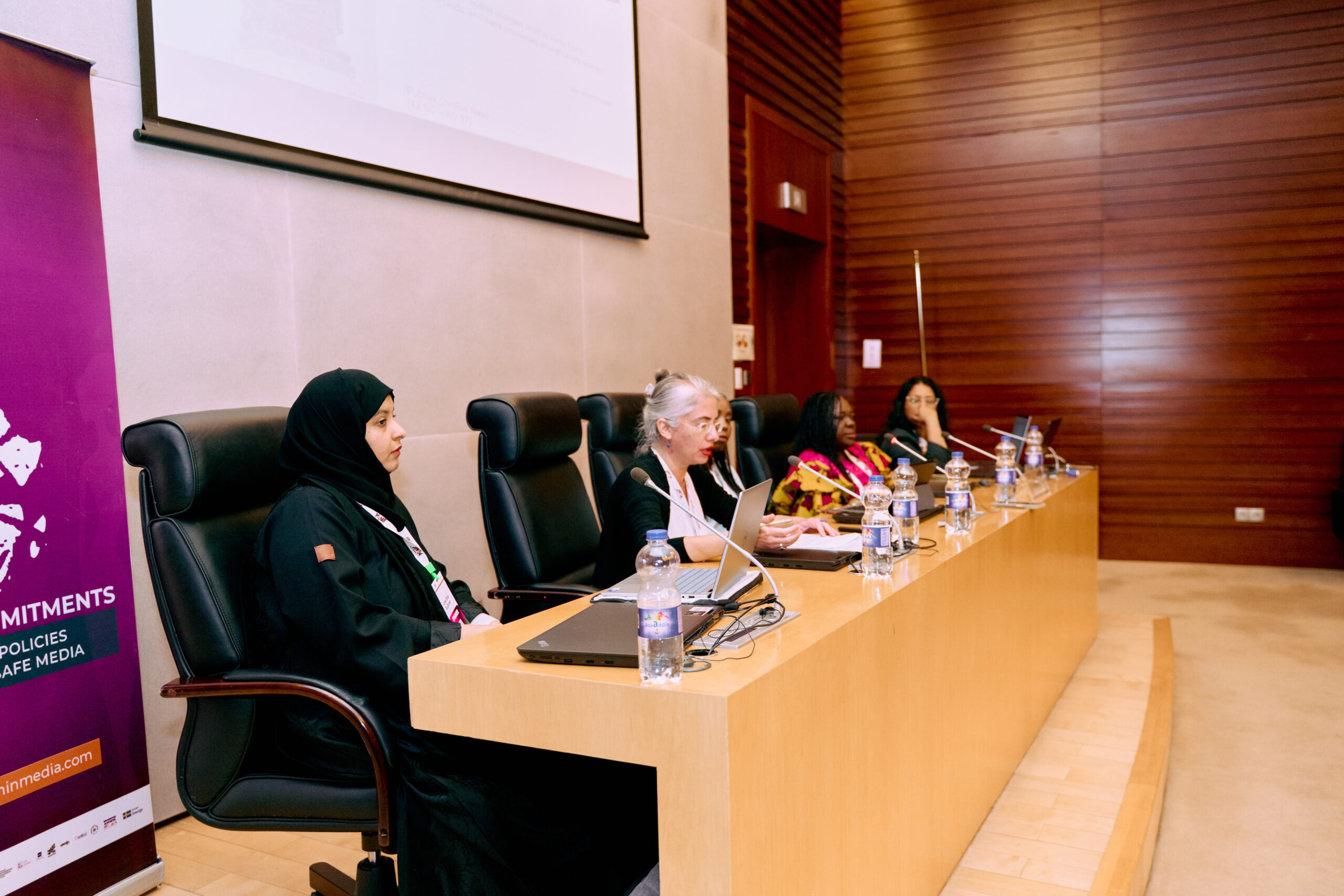
Late morning saw the return of panel discussions, but the tone had shifted from problem identification to solution forcing. In Conference Hall 3, Scheherazade Safla-Gaffoor moderated a riveting session on racial and gender discourse in African media. The speakers pulled apart the persistent myth that representation alone equals progress. “Visibility is not victory,” one panellist insisted, “if the structures remain unchanged.”
In the adjacent hall, the conversation expanded to the relationship between gender justice, peacebuilding, and the Sustainable Development Goals. Far from abstract, the session made a compelling case that the media is a frontline institution and not a tertiary player in peace. Other rooms echoed the same urgency. Sahelian and South African journalists reflecting on resilience under threat, and a plenary panel led by platform accountability experts asking the uncomfortable but necessary question, “What does integrity look like in a digital ecosystem built without women in mind?”
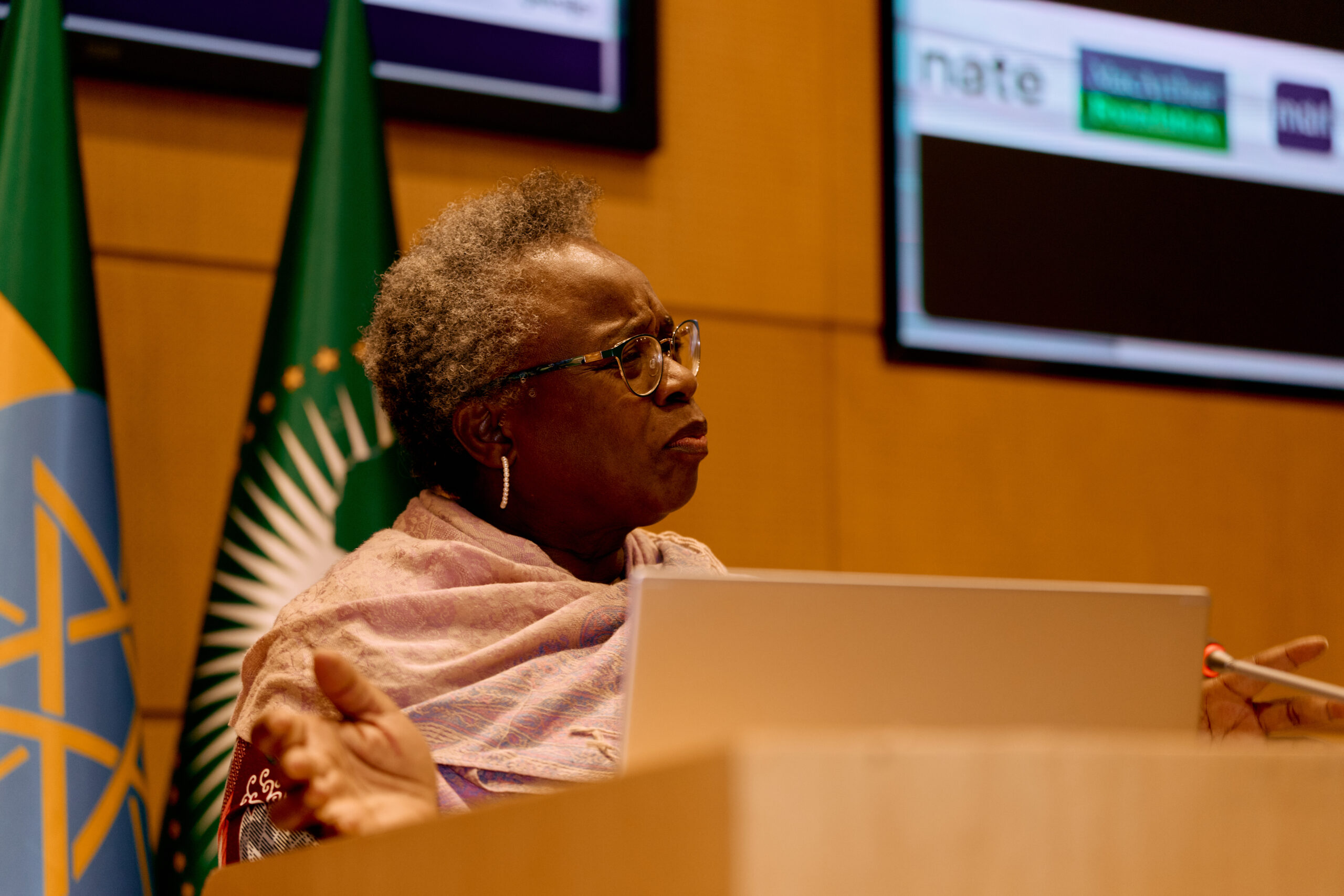
After lunch, delegates returned to the plenary for what felt less like a session and more like a collective exhale. Dr Yemisi Akinbobola, flanked by Zanele Zwane and Sylvia Adongo, explained the process for the Communities of Practice (COP) roundtables that would define the continent’s next steps toward gender-safe media. Her message was crisp and uncompromising: “Commitments mean nothing if they do not survive the trip home.”
Across three breakout rooms — CH3, CH4, and Plenary — delegates gathered in circles, not rows. Journalists sat beside policymakers, activists beside regulators, students beside funders. For nearly an hour, they debated what was both possible and non-negotiable. Some commitments were personal, some institutional. Others aimed squarely at national policy to turn the Kigali Declaration and the AU-CEVAWG framework into work plans.
Afterwards, rapporteurs clustered in a corner of the building, cross-checking timelines, indicators, and accountability structures. The tea break became a hive of urgency. At 4:45 pm EAT, Prof. Oluyinka Esan returned to the stage for the final feedback session. The room was quiet with the concentration of a sector that knows it has crossed a threshold. Rapporteurs of roundtable after roundtable presented commitments that were specific, measurable, and time-bound. As closing remarks drew near, it became clear to everyone in the room that AWiM25 had deployed.
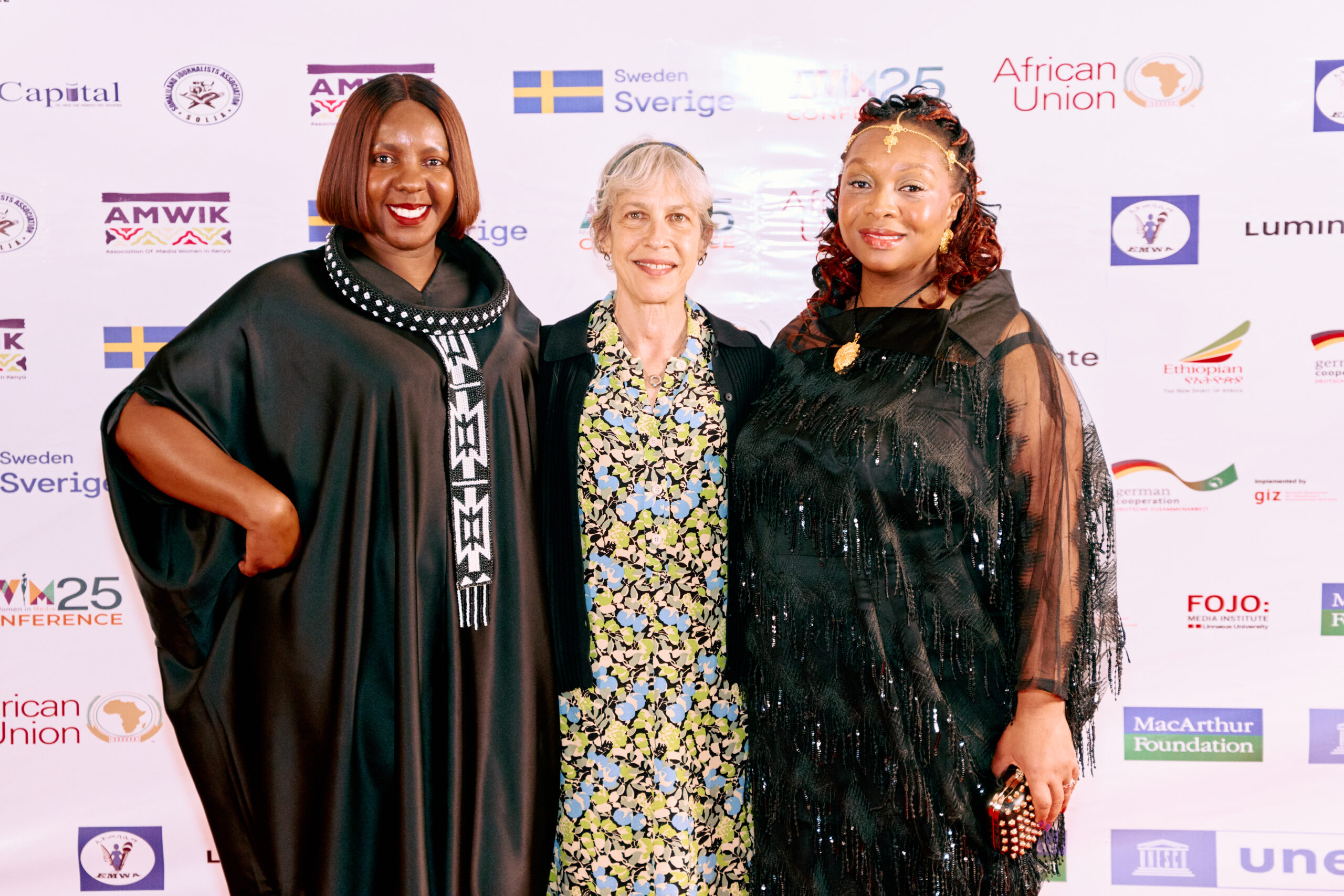
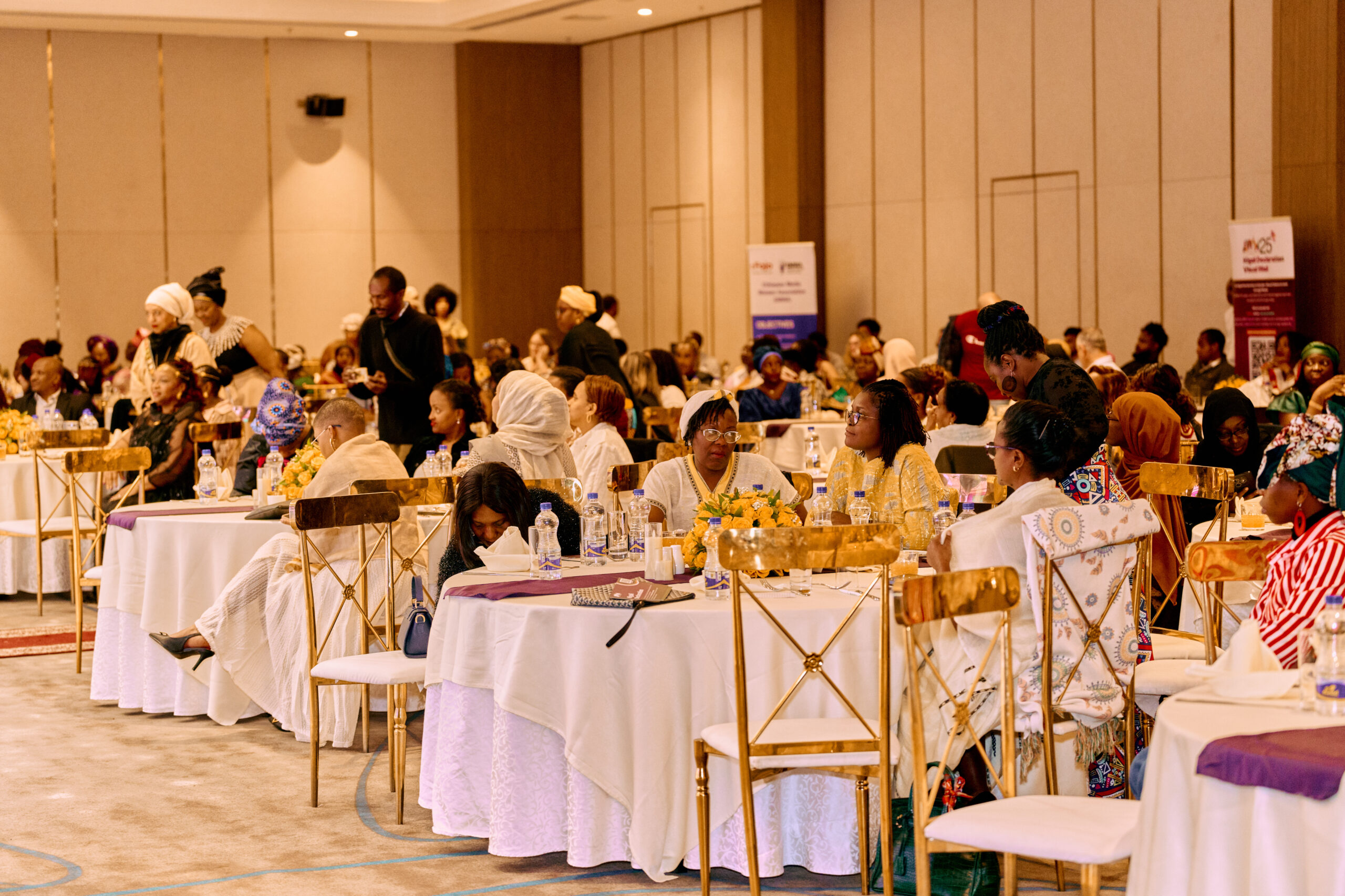
If the AUC Headquarters was where resolve was formed, the Skylight Hotel was where resolve was celebrated. By 7:30 p.m., guests arrived at the hotel’s famous Abyssinia Hall into the “GeleVerse”, the official name given to this year’s AWiM post-conference dinner, where everyone was encouraged to dress in their native attire, complete with headgear. Conference guests did not disappoint as they arrived at a long red carpet, Afro music, soft lights, and the unmistakable warmth of colleagues who had become collaborators.
At 8:00 p.m., Dr Yemisi Akinbobola offered welcoming remarks that were equal parts gratitude, challenge, and joy, followed by reflections from AWiM25 partners, including key executives at European Airlines and Fojo Media Institute.
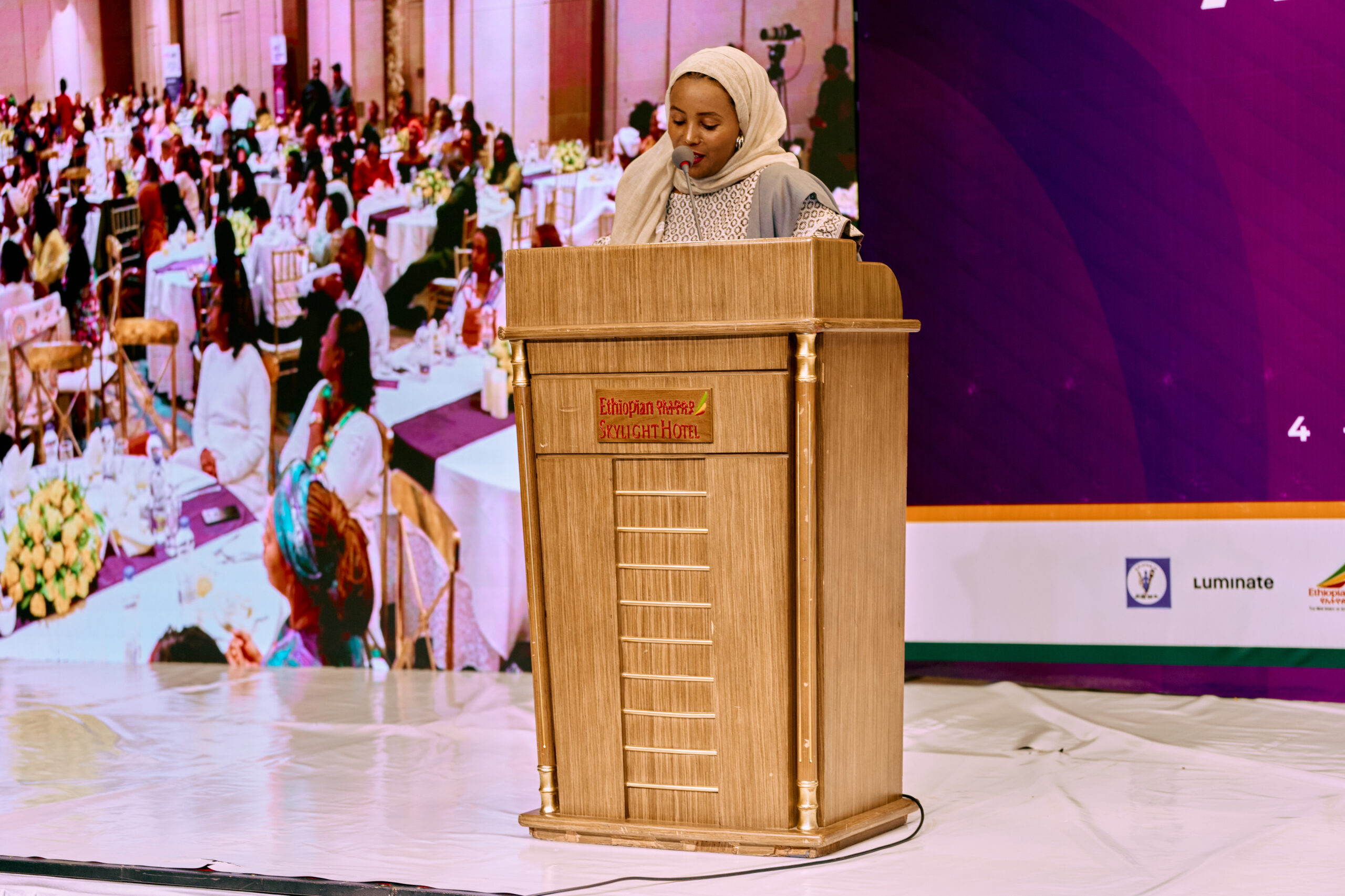
The UNESCO Beijing +30 report was then presented at 8:15 p.m. by Elham Ali Mehammed (Programme Coordinator, Fojo Media Institute, Ethiopia) before a gripping theatrical performance of interpretive dance, spoken word and hums, framing the report as both a warning and an invitation. Traditional Ethiopian dance followed with dinner, long conversations, exchanged business cards, photo ops, laughter, a lot of dancing, a sense of shared mission, and the awareness that when everyone flew home, the real work would begin.
AWiM25 ended in the small, glowing circles of people planning the future from their dinner tables.