
With experience at Al Jazeera, Euronews, ETV and eNCA, Assistant Professor Scheherazade Safla-Gaffoor (Northwestern University, Qatar) believes stories are strategy. We spoke with her at the conference.
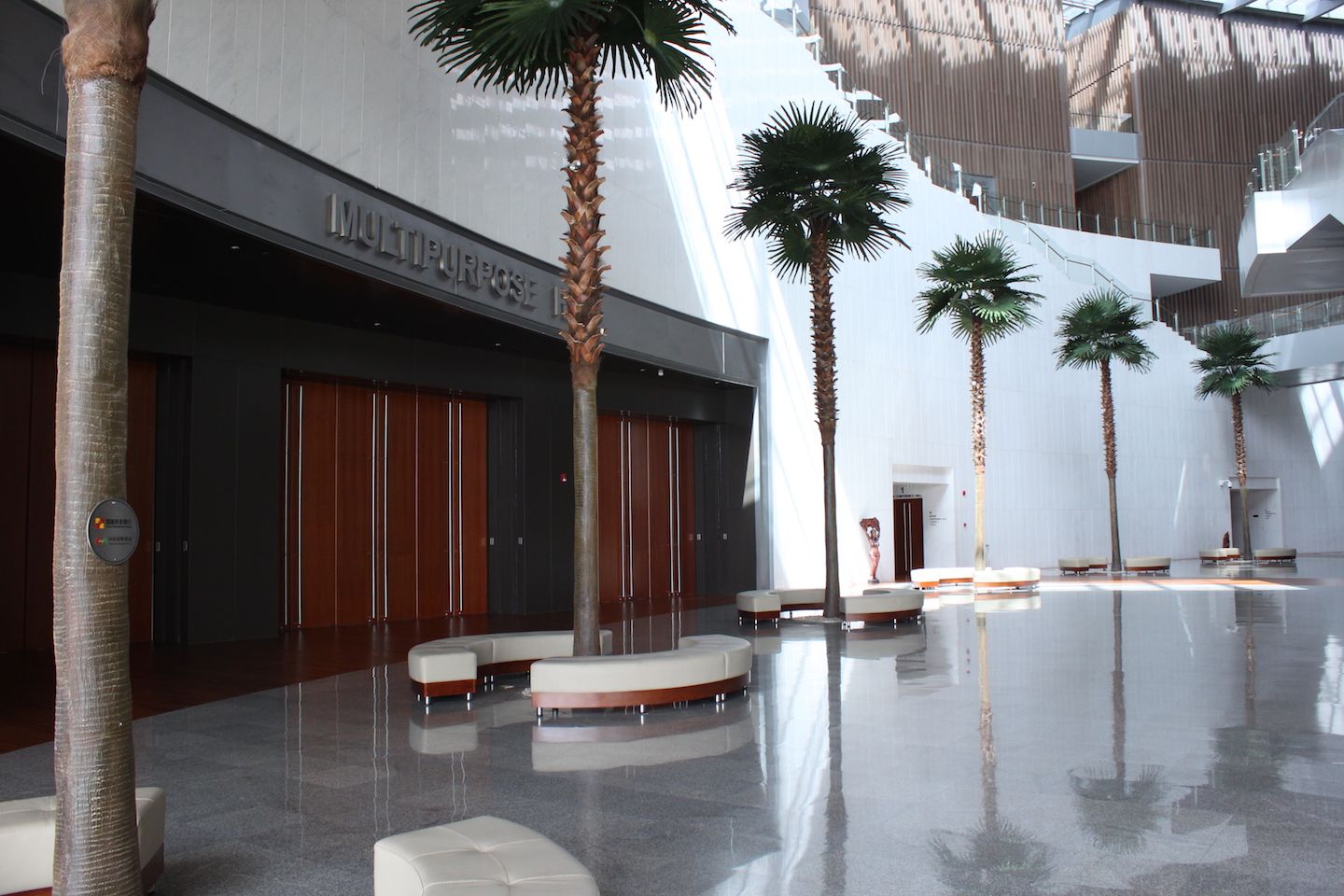
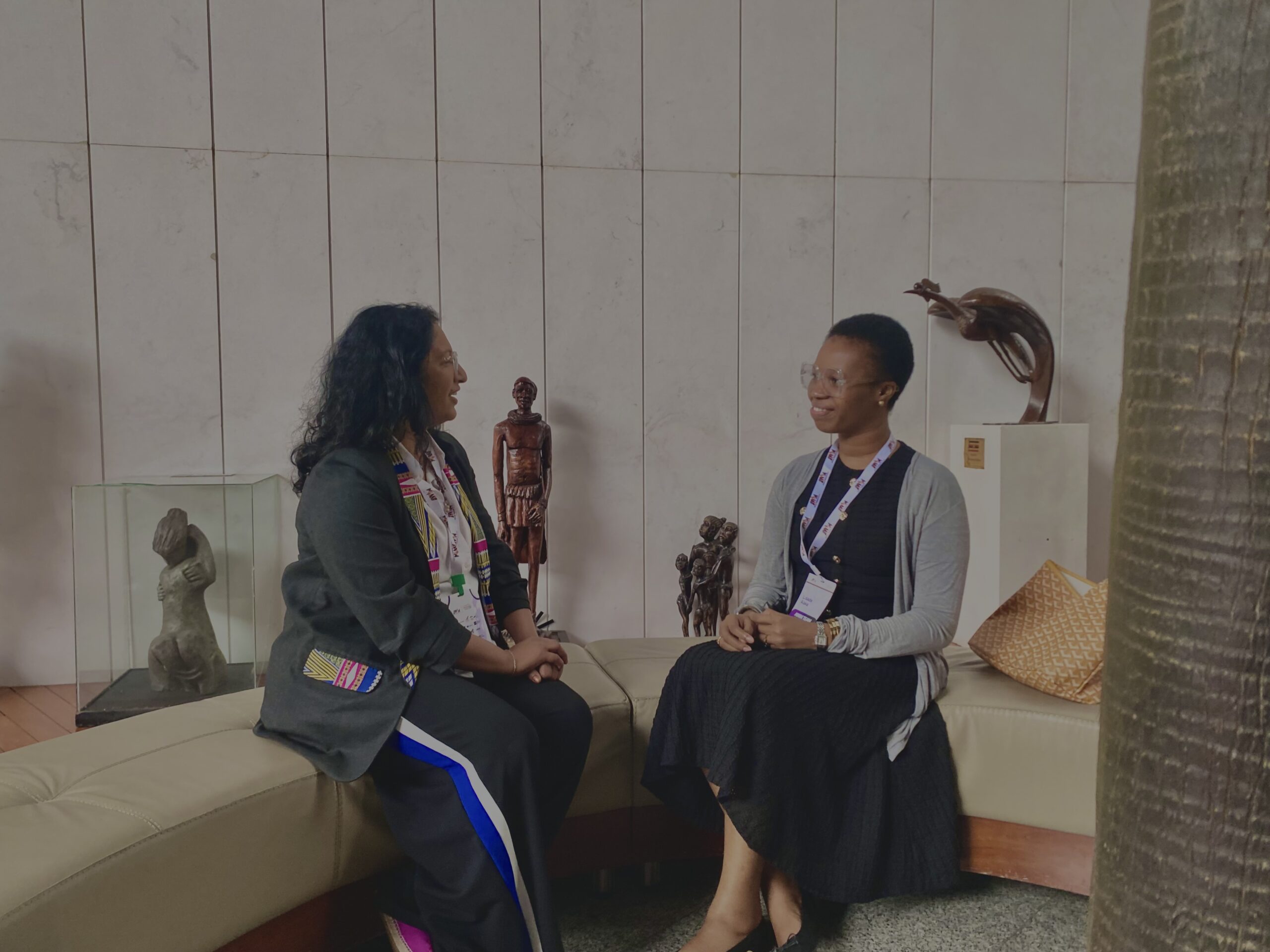
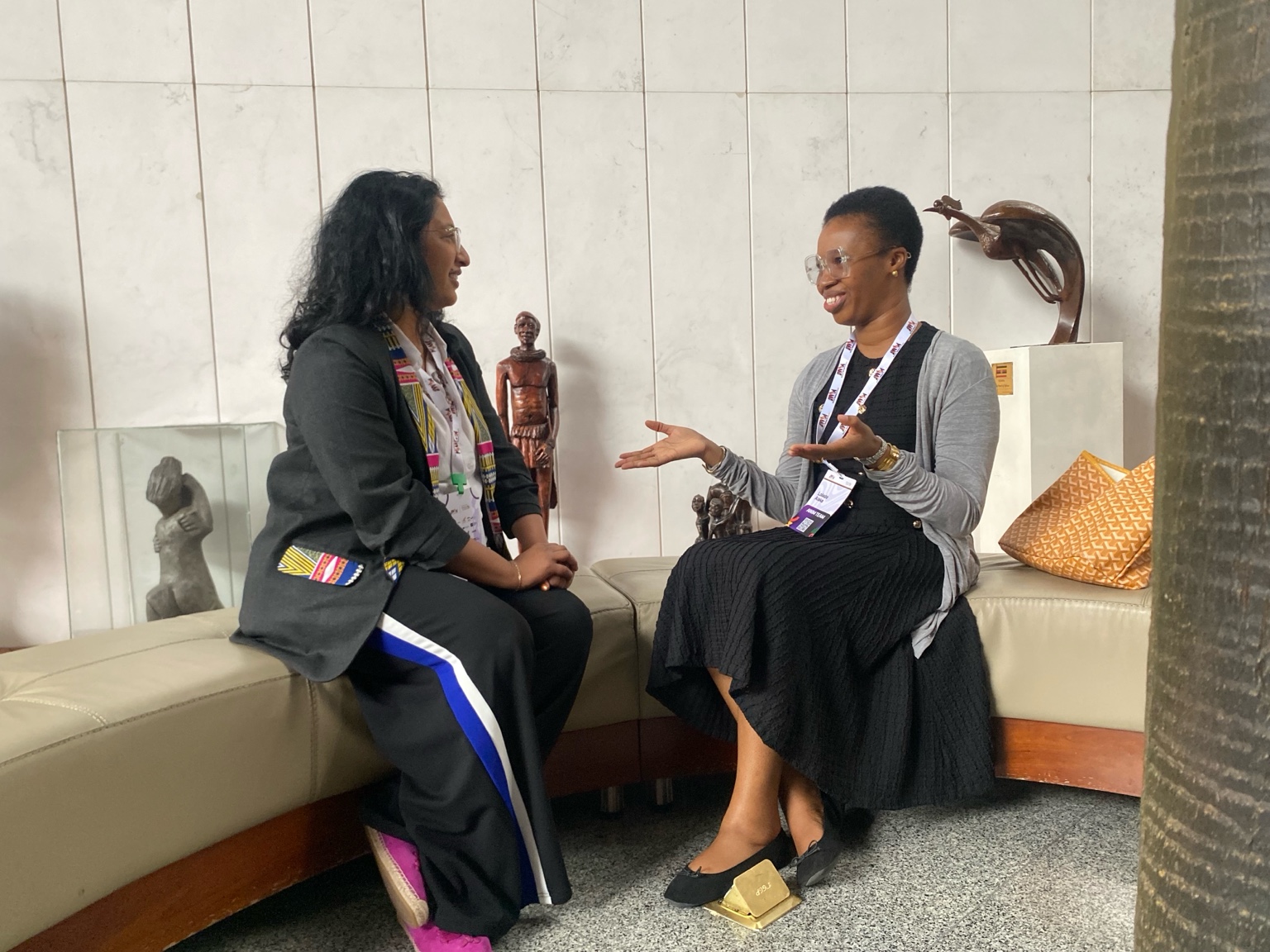
It was at the margins of the 9th African Women in Media Conference 2025 (AWiM25), away from the plenary halls and the choreography of panels, in a quiet sitting area tucked into the side lobby of the African Union Commission headquarters, Addis Ababa, Ethiopia. The space felt deliberately unhurried, with low leather benches arranged in a loose curve, polished stone underfoot, and a scatter of carved African sculptures placed with museum-like care behind us. Delegates drifted past in ones and twos, badges swinging, voices softened by the scale of the building.
Scheherazade arrived exactly as she would remain throughout the conversation, composed, open, and entirely unpretentious. There was nothing performative about her presence, no air of hierarchy, no signal that she had spent decades in global newsrooms or once worked at Al Jazeera. She sat angled toward me, attentive, hands relaxed, listening with the same seriousness she later gave to her answers.
I was seated opposite her, phone dutifully recording (with her permission, of course) beside us, still carrying that quiet mix of excitement and nerves that comes with speaking to someone you’ve admired but never met. Any distance dissolved quickly. She laughed easily. She asked questions back. The conversation took on the tone of something shared rather than extracted, less interview than exchange, unfolding in the pauses between sessions, the hum of AWiM25 continuing just beyond the lobby walls.
She introduces herself without spectacle, the way people with long careers often do, by placing the work before the résumé. She is a former broadcast journalist with over two decades of experience in international media, a career that began in South African television before expanding into global newsrooms. She has lived in Qatar for 15 years now, working at Al Jazeera for four of them, before making what she describes not as a retreat from journalism but an extension of it… into teaching.
I ask her more about her name, Scheherazade.
It is Persian. Her grandmother had an ear for the piece of music of the same name, for rhythm, and for the way stories moved through people. She named her granddaughter after a storyteller, this Scheherazade tells me, almost casually, as if destiny was something that happened sideways.
“Maybe she’ll become a storyteller too,” her grandmother had said.
And she did.
Today, Scheherazade teaches journalism at Northwestern University in Qatar. “I wanted to pass on all these years of knowledge to the next generation of media professionals and storytellers,” she says.
At Northwestern, Scheherazade describes herself as a creative research scholar. She produces a podcast, fittingly named “1001”, now entering a second season, and conducts research that is inseparable from her storytelling practice. One project, a digital participatory action research initiative on the Cape Flats ganglands in South Africa, exists simultaneously as reportage, scholarship, and public-facing media. The same work she presents at academic conferences is also designed to be heard, seen, and understood by the people it is about.
This, for Scheherazade, is not a compromise. It is the point.
Some academic research circulates within closed loops, published in journals read by only a handful of specialists, inaccessible to broader publics.
Increasingly, she says, academia itself is being forced to reckon with this limitation. There is a growing hunger for research that translates, speaks outward, and allows findings to live beyond footnotes and paywalls.
“You should be able to share insights and lessons learned,” she says, whether the work takes the form of long-form writing, audio, or creative media. “And I am fortunate to have the support of a university Dean who understands that there isn’t only one way to tell a story.”
That belief shapes how she experiences the African Women in Media Conference, where she has returned year after year. For Scheherazade, the conference’s power lies in both its mission and, perhaps more importantly, its standards.
“This isn’t something you’re entitled to as part of the team or one of its guests,” she says. “It’s a privilege to be here.”
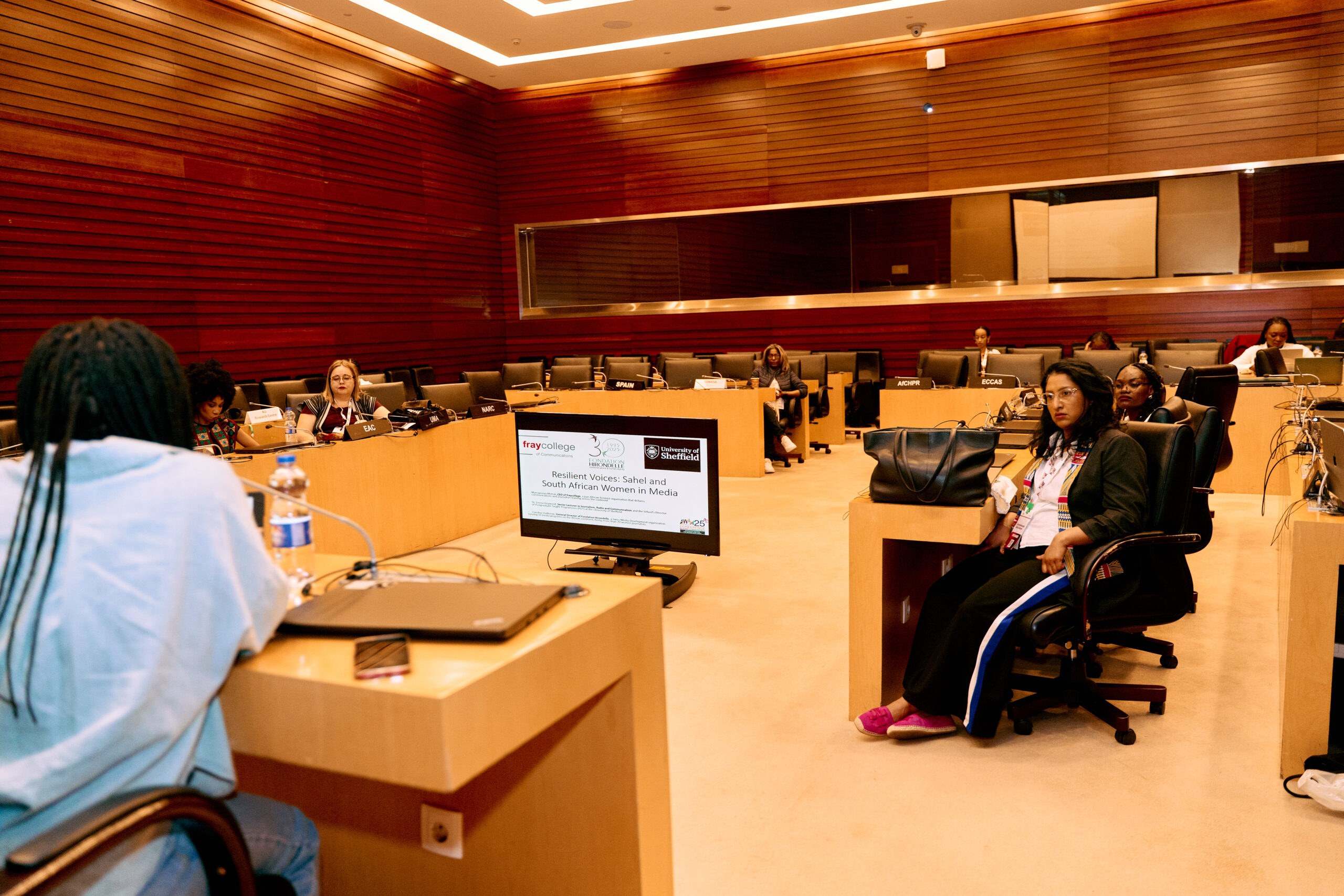
Participants pitch their work as rigorously as they would at any global academic gathering. Submissions are assessed. Standards are enforced. The result, she says, is a rare space where African women’s media work is taken seriously, without being flattened or diluted.
What keeps her coming back, though, is not just validation. It is access.
Scheherazade speaks often about the ethical tension of global storytelling: the pressure to present work about the Global South to audiences in the Global North, while the people being written about remain excluded from the conversation.
AWiM, she says, interrupts that imbalance. It is international without being extractive. Researchers and storytellers arrive from Turkey, Iran, Yemen, across the continent and the diaspora, many presenting work that remains largely invisible in dominant media circuits.
“I love the diversity,” she says. “I feel supported here. I feel like my research is respected. And I’m constantly exposed to work (stories, realities) I hadn’t even realised were happening.”
For Scheherazade, that, more than anything, is what makes the conference indispensable, the proximity to people and to forms of knowledge that refuse to stay marginal.
*
She speaks about discovery with a kind of quiet astonishment. How, even after decades in journalism, the conference continues to reveal work she wishes had existed earlier in her own career. At the conference, she met Mamaponya Motsai (CEO of pan-African feminist organisation Fraycollege, documentary filmmaker, and former journalist) properly for the first time, after sharing a panel with her. Motsai’s research on gender dynamics inside South African newsrooms struck Scheherazade immediately.
“I kept thinking, I wish this work had been done when I was in a newsroom,” she says. “But here it is, finally, and here’s a platform where we can learn from it.”
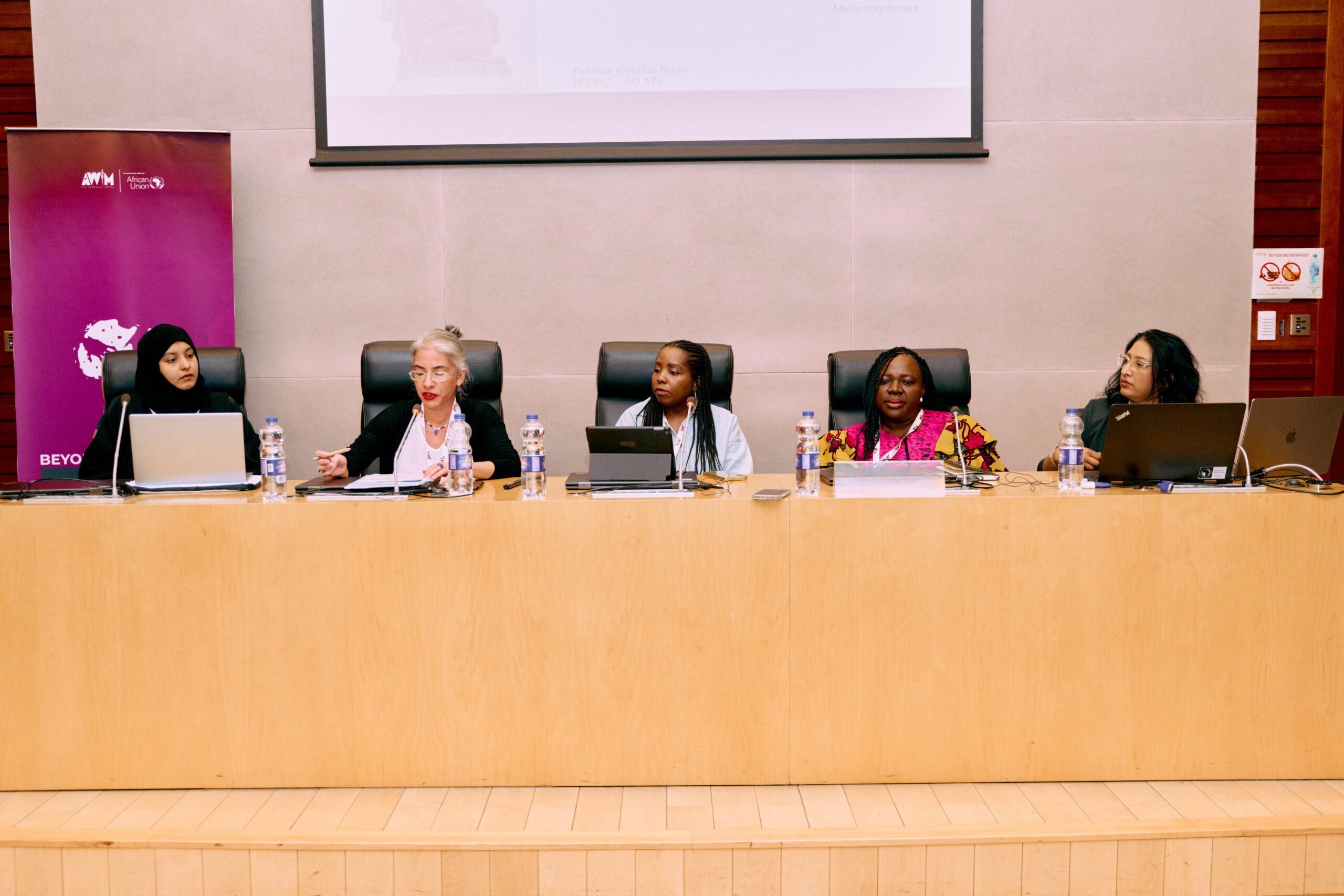
For Scheherazade, the value of the African Women in Media Conference goes far beyond networking. What makes it rare, she says, is the way it collapses artificial boundaries between scholars and practitioners, researchers and reporters, academics, NGO workers, and women still working inside newsrooms. People move fluidly between roles. Journalists who now research the industry, researchers who remain deeply embedded in practice, professionals who do both at once.
“There aren’t many spaces like this,” she says.
Too often, media conversations, especially those about policy, reform, and ethics, are dominated by men speaking to one another, setting agendas for an industry that excludes the very voices most affected by its decisions. There was a moment from a panel where the structural imbalance became stark:
Major media organisations are owned by men; global social media platforms are owned by men.
That fact alone, she argues, shapes how issues of equity, safety, and representation are treated… or dismissed.
Outside spaces like this, there is a growing public frustration. Among the general public, there is often a sense that no one is doing enough, that the fights for media freedom, gender equity, and reform have stalled. But Scheherazade believes conferences like AWiM disrupt that narrative.
“When you come here,” she says, “you realise just how much people are actually doing to make a difference.”
Across countries and contexts, women are pushing change within their own spheres, often invisibly, often without recognition, foot soldiers, working quietly but relentlessly to secure the rights and freedoms others benefit from without ever knowing where they came from.
Yet she is careful not to romanticise the space. She is acutely aware of its limits.
“There’s always the risk that we’re preaching to the preached,” she says.
The people in these conference rooms already understand the problems. They already agree on what needs to change. As Dr Yemisi Akinbobola, cofounder/CEO of AWiM and convener of the annual AWiM Conference, repeatedly reminds participants, the real challenge is reaching those who are not present, those who have yet to commit to reforms like the AWiM 2023 Kigali Declaration.
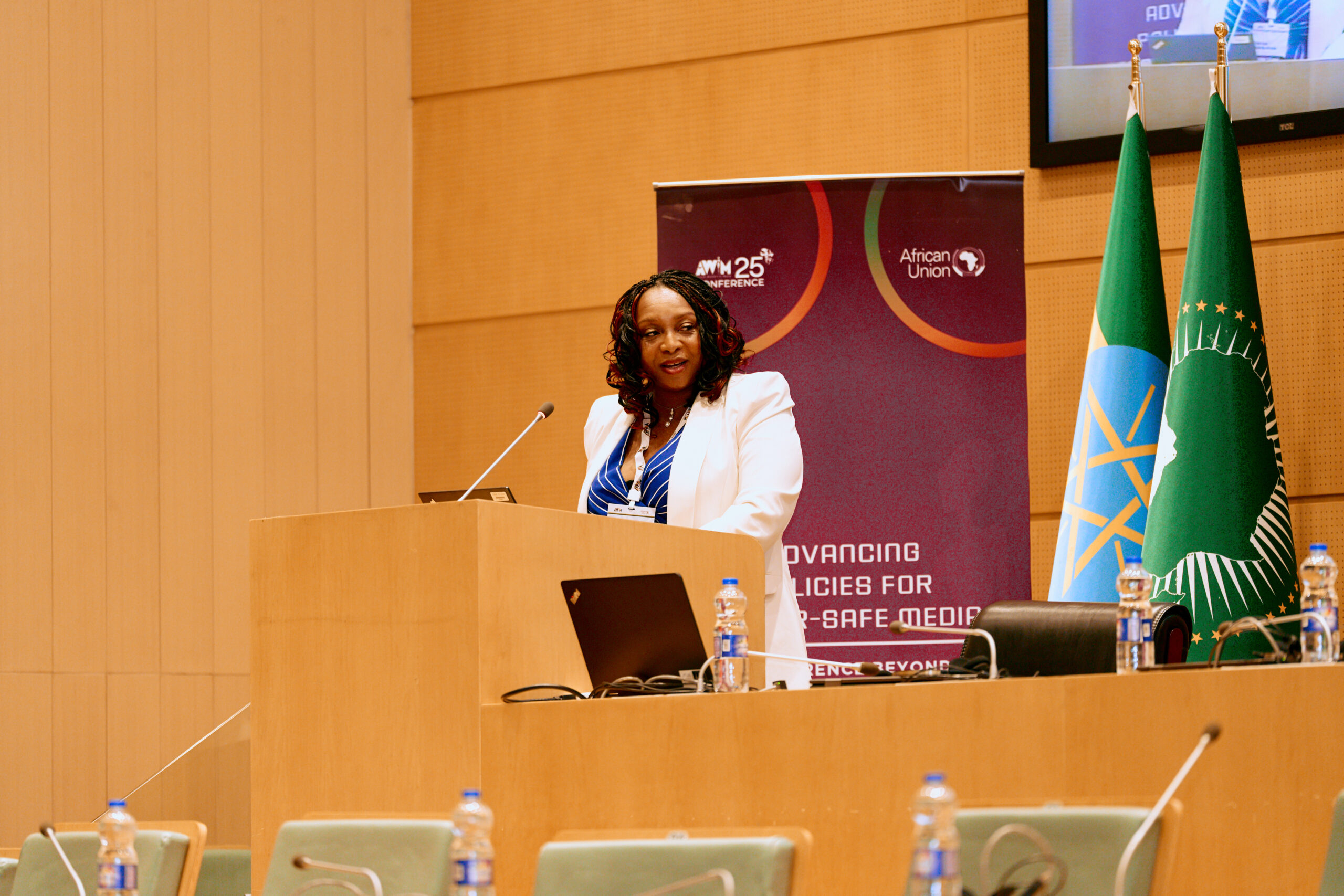
That, Scheherazade believes, creates an obligation. The work cannot end with a panel or a presentation. It must travel outward through classrooms, newsrooms, podcasts, research, and personal platforms.
“This isn’t about just us,” she says. “It can’t be.”
If the conference becomes an echo chamber, it loses its power. Its purpose, she insists, is not simply to uplift those already inside the room, but to push change beyond it into systems that remain resistant, indifferent, or quietly hostile.
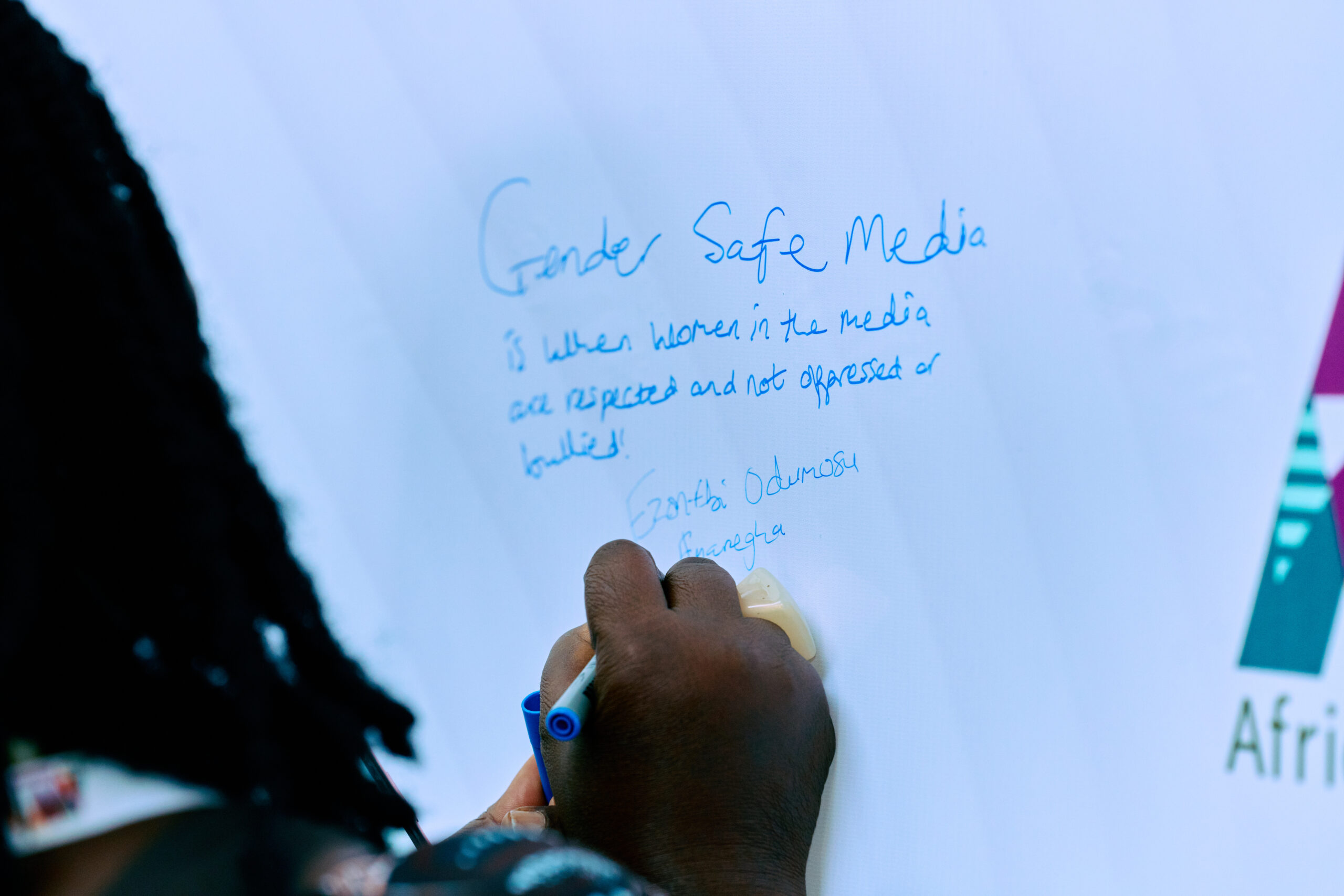
When the conversation turns to gender-safe media, Scheherazade does not hesitate. The greatest obstacle, she says, is the same one that surfaced again and again across the conference panels: ownership.
Media ownership, she agrees, remains overwhelmingly unrepresentative. The people who own news organisations, the global social media platforms that now shape public discourse, often do not reflect the communities they serve. As a result, African women’s voices are not prioritised, not taken seriously, not structurally centred.
“It comes down to who owns the platform,” she says. “People prefer voices that they feel an affiliation with personally.”
What matters now are solutions. And those, she believes, must be driven by the younger generation. They must be empowered to innovate, own platforms, build alternatives, and use those spaces intentionally to prioritise marginalised voices rather than replicate the same hierarchies under new names.
*
Scheherazade resists the idea that women must shoulder this burden alone. If media power remains concentrated among men, then men must also be part of the work.
“We need more men to be advocates,” she says, allies who ask themselves how their influence can be used to open doors rather than close them.
At the conference, she met women who are mothers, caregivers, executives, founders, journalists, researchers, often all at once. The labour is already happening. The imbalance lies in what it costs.
“So many men get to where they are because someone else is doing everything else,” she says. Historically, that someone was a wife managing the home, absorbing the invisible labour that allows a career to flourish uninterrupted. “Who does that for us?”
For many women, the answer is no one.
Behind countless successful women, Scheherazade observes, there is no equivalent support system, only relentless self-reliance. Some may have encouraging parents or extended family, but many rise entirely on their own. She finds this both devastating and deeply admirable.
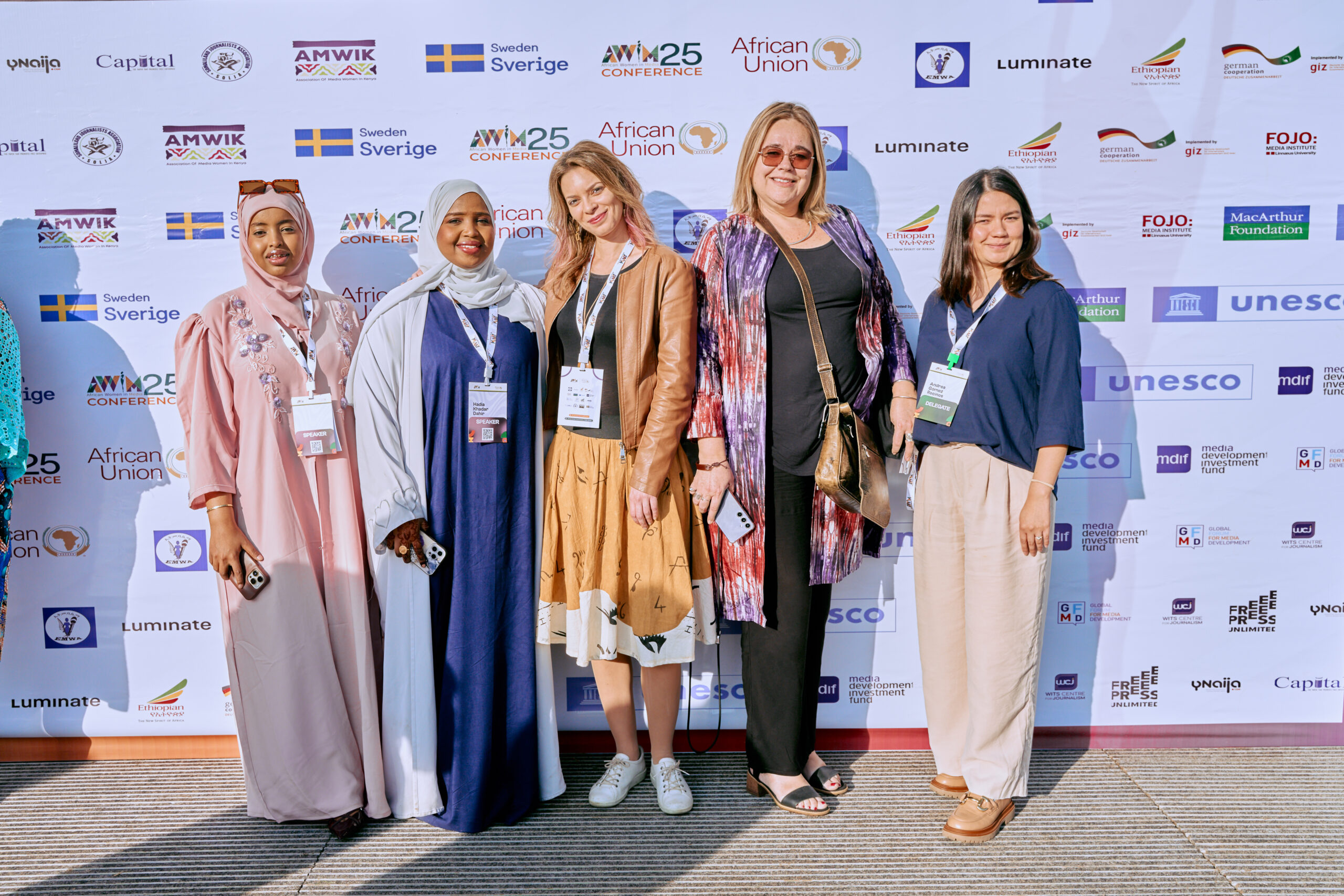
Each year at AWiM, what strikes her most is the calibre of women in the room, and their humility. Power here is worn lightly. Accomplishments are rarely announced upfront.
“You’ll talk to someone for fifteen minutes,” she says, “and only then discover she’s the CEO of a news organisation or that she owns a radio station.” By contrast, she adds, many men often lead with their titles. Their authority arrives before they do.
Scheherazade is drawn to the way many of these women refuse to let status define them. Their work matters deeply, but it is not their entire identity. That, she believes, is something young people should aspire to. Perhaps men, too.
She acknowledges, though, that this humility is not always a choice. Women are often socialised to downplay achievement and avoid taking up too much space. The result is a familiar double bind where confidence risks backlash and modesty risks invisibility.
Still, Scheherazade has learned to navigate the tension on her own terms.
*
When asked what she would tell a young person just entering the media industry, Scheherazade answers without hesitation. It is the same advice she gives her students.
“Don’t sit back and wait for someone to give you an opportunity,” she says. “Create one.”
She urges young journalists not to treat the media as something they must be invited into, but as something they can claim. If the stories you want to hear do not exist, she argues, then it is your responsibility to make them and to do everything in your power to put them into the world.
“The reality is, this is a self-serving industry,” she says. Outside rare spaces like the African Women in Media Conference and her university, people are often looking out for themselves. Support is not guaranteed. That is precisely why young professionals must learn to carve their own paths rather than waiting to be absorbed by institutions that may never truly see them.
Scheherazade wants to see a new generation of media innovators, not just reporters chasing legacy brands, but founders and owners. She imagines young people starting their own media companies, building platforms on YouTube and beyond, and taking pride in spaces they have created themselves. But she is careful to draw a distinction.
“This isn’t about just anyone picking up a phone,” she says. It requires groundwork; training, ethics, and foundational skills developed in journalism and media schools. What she resists is the idea that success must look like a job offer from a top news organisation, or that ambition is measured by proximity to power.
“Everyone starts somewhere,” she says.
Not everyone has access to capital, she acknowledges. That is why institutions like the Media Development Investment Fund (MDIF) matter. That is why AWiM’s ecosystem of networks and intentional introductions exists. This, she insists, is the makings of structural support.
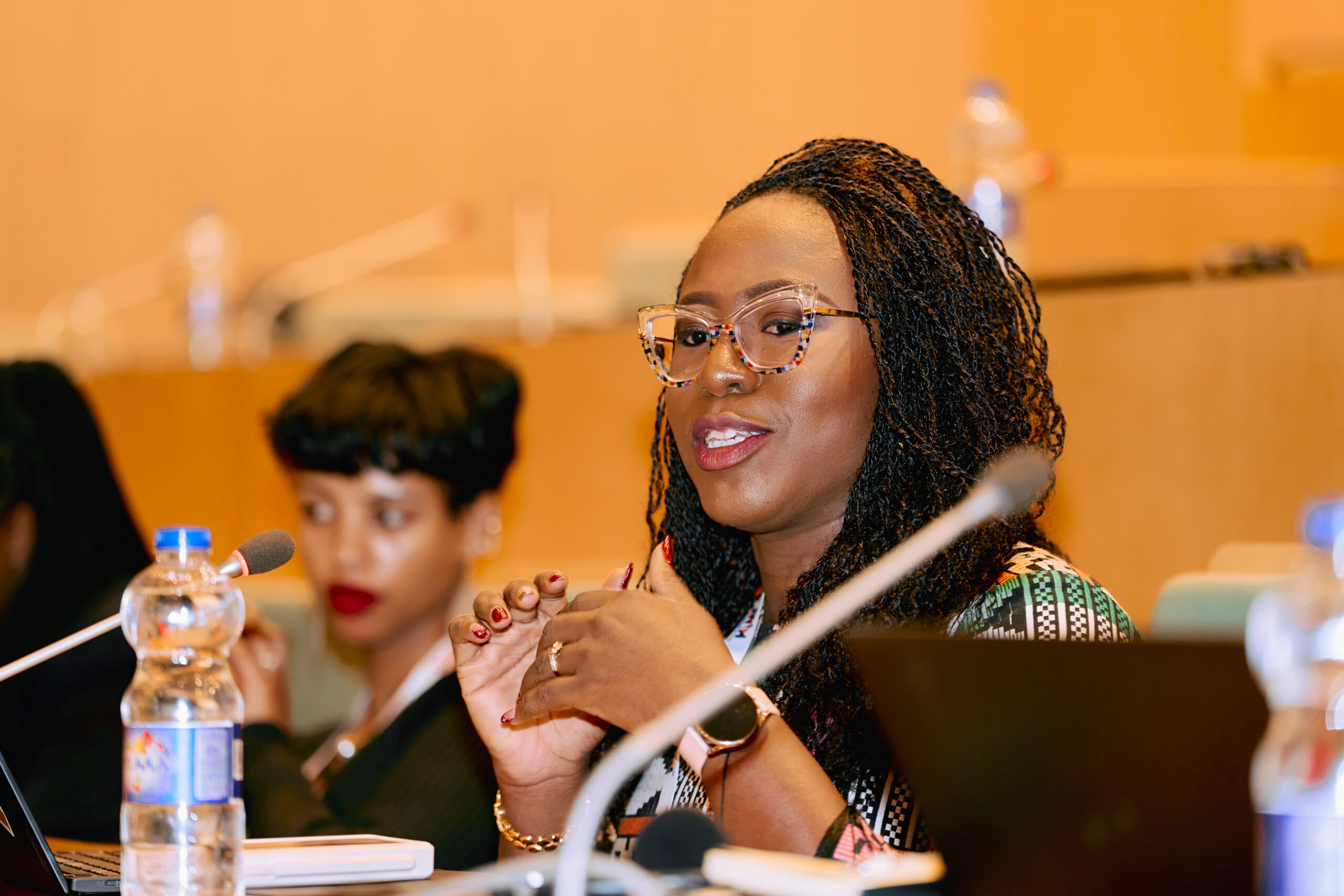
Then Scheherazade pauses, almost incredulous, reflecting on where she is sitting.
For most of her career, the African Union appeared to her as text on a wire, as breaking-news straps scrolling across screens while she reported from elsewhere—first in South Africa, then on international desks, then live on air at Al Jazeera. The AU was always distant, mediated, abstract.
“And now, I’m here,” she says, seated inside its headquarters in Addis Ababa. “Ironic that I didn’t get this opportunity through the news organisations that I worked for.”
The invitation, she notes, came instead through African Women in Media. For that, she is openly grateful.
“We are really blessed to be here,” she says. Not only for the voices in the room (the women, their work, their insights) but for the infrastructure that made their presence possible in the first place.
What AWiM has built, Scheherazade suggests, is an intervention.
*
The conversation turns to accountability. Gender policies are no longer the problem, at least not on paper. Most media organisations now have them. Governments, too. The language exists. The frameworks exist.
Implementation does not.
In her conference opening speech, Dr Akinbobola spoke about how institutions have learned to perform compliance without practising change. The question is no longer whether policies exist, but whether they have made women journalists safer or altered power dynamics in any meaningful way.
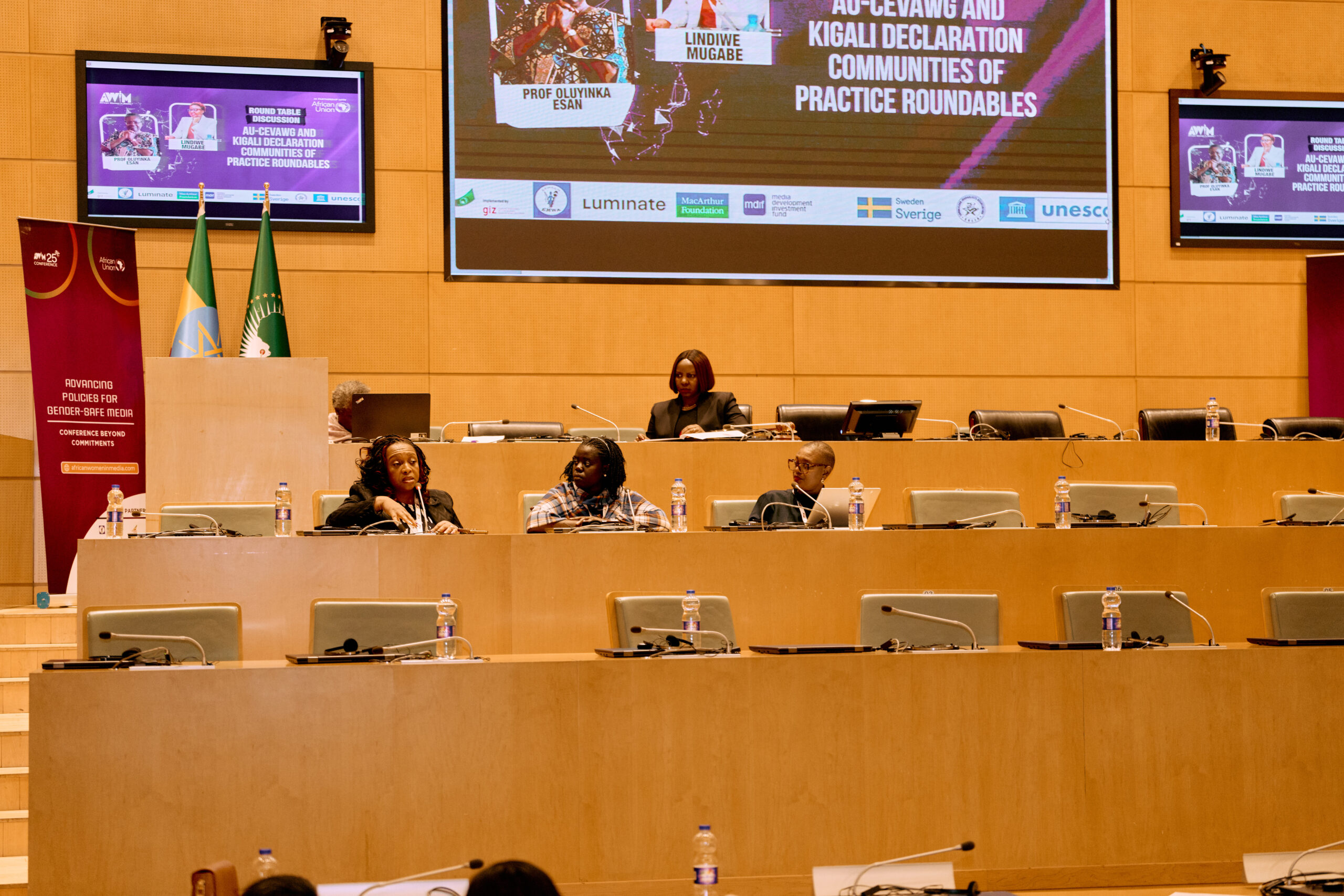
In Scheherazade’s view, accountability begins with refusing silence.
“You can’t stop calling them out,” she says, “on open platforms, naming institutions, tagging them, and asking over and over again what happened to the promises they made.”
Fear, she acknowledges, is real. Young journalists are still building careers; they worry about burning bridges. The burden falls on those who have reached a point of relative stability, people with enough standing to absorb the backlash and still remain upright.
“You need voices that can stand on their own two feet,” she says. “And aren’t afraid to ask, was this policy just a box-ticking exercise?”
Research, she argues, is one of the sharpest tools available, but too often, rigorous studies documenting abuse, exclusion, or non-compliance circulate only within conferences and journals. Scheherazade wants that work mobilised.
If research proves that harm persists despite formal safeguards, then institutions must be confronted with evidence and with consequences. And if the organisation implicated refuses to publish the findings? She smiles, pragmatic, “Take it to their competitors.”
There is nothing unethical, she insists, about strategic exposure. If one outlet will not report on its own failures, another gladly will. Accountability, in that sense, becomes a matter of distribution, placing truth in front of platforms powerful enough to force a response.
Still, is the terrain improving?
At times, it feels as though progress has stalled, or worse, reversed. In 2025, the global political climate feels brittle, reactionary. The backlash is visible. Conversations on safety that felt possible in 2018 now meet open resistance.
However, Scheherazade shares a wider, more positive view. Much of what is being discussed today was already happening when she entered journalism twenty-five years ago. The difference is that then, no one spoke about it. Survival required silence. You focused on getting through the month, collecting your salary, and staying employed.
“Another day, another dollar, people would say. It’s above my pay grade.” That mentality, she believes, is precisely what allowed abuse to endure.
She does not claim certainty about where things are headed. Fatigue is real. People grow tired of pressing against walls that refuse to move. But defeat, she insists, cannot be an option.
“Even when it feels like nothing is shifting,” she says, “we can’t stop.”
*
When Scheherazade begins to answer the question of any personal experience of harm or exclusion in the industry, she does not reach for a single anecdote. Instead, she reaches for a feeling, one that had returned unexpectedly earlier that day at the conference, while listening to Mamaponya (Motsai) present her post-COVID newsroom research.
“It was triggering,” she says quietly. “Because it was exactly what I lived.”
Motsai had spoken about how newsrooms now tell journalists to be strong when something goes wrong. Scheherazade pauses at the phrase. In her time, she says, there were no such gestures, no language of care, even if seemingly insufficient, no recognition of harm. There was only resignation.
“That’s the job, people said.”
She remembers what that meant in practice. Reporting violent crime in South Africa. Seeing dead bodies. Witnessing acts so brutal they resist repetition: women murdered in ritualistic ways, their violence folded into euphemisms like ‘muti killings’. No counselling followed. No debrief. No questions about how the work might linger in the body and mind.
And inside the newsroom, the ‘smaller’ violations, the sexual undertones, the remarks, the moments that should have been named, were laughed off because that was how survival worked.
You learned quickly what to ignore. You learned to pretend not to know what was unacceptable, because knowing would require speaking, and speaking was what carried consequences.
Training, she says now, might have changed everything. Clear boundaries. Language for harm. Permission to say ‘this is not okay’. But young journalists still rarely have that clarity. They are new, afraid, uncertain of their power. Her voice softens when she speaks directly to them.
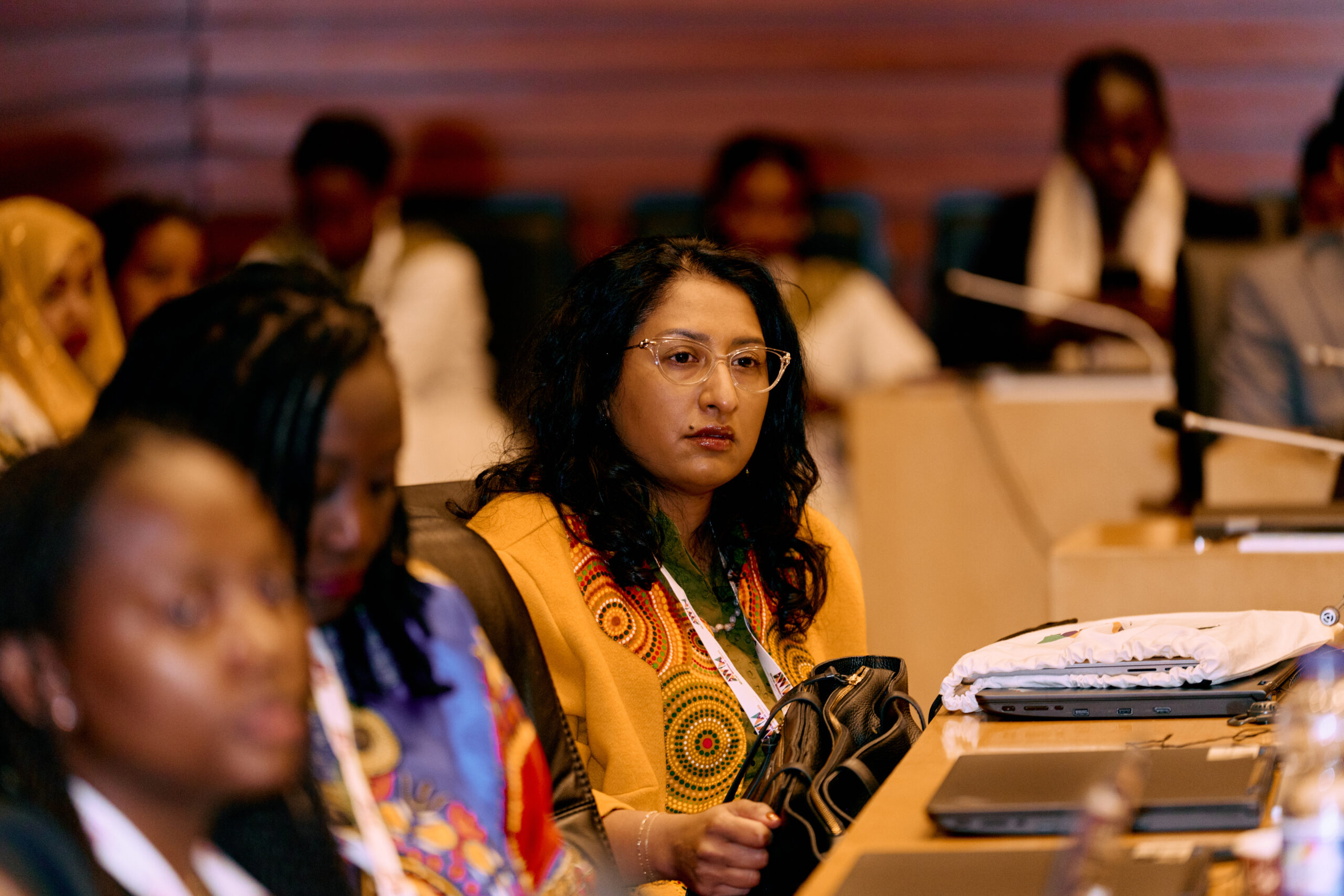
“There are people who will fight for you,” she says. “But they can’t help you if they don’t know what you’re going through.”
Courage, she insists, does not always mean confronting power head-on. Sometimes, it means telling one person. Finding someone who can carry the weight when you cannot.
Listening to her, I think about how many women leave journalism long before they ever reach that choice. Abuse plays a role, but it is only one layer. In much of Africa, survival alone is enough to drive people away. Journalism often pays poorly. The risks are multifaceted. Mental health is rarely protected. Many women drop out before harassment or discrimination even enters the equation.
At one panel, a man remarked that women who study journalism often “end up in communications,” his tone suggesting retreat, an easier path. A panellist responded plainly that communications is a safer career, more so for women. It pays better. It allows a life outside the newsroom. Journalism, by contrast, demands everything (time, energy, emotional labour) often without offering protection in return.
Scheherazade does not dismiss these realities. But her message to young people is unwavering.
“Never give up on journalism,” she says. Because it is necessary.
“We need young people who still have the energy,” she says. “The strength to speak truth to power.”
There are stories, she believes, that older journalists, worn down by trauma, by years of unprocessed violence, can no longer tell. Those stories do not disappear. They wait.
“That duty passes to you.”
She speaks, too, of permission to pivot, to choose differently later on. She recalls being asked once if she felt like a sell-out for moving from hard politics to entertainment reporting (before she moved to teaching).
“I didn’t,” she says. “There’s a time and place for everything.”
She had done the hard news. She had earned it. And even in entertainment journalism, she was still reporting truthfully, still telling stories that mattered, still changing lives in quieter ways. What matters, she insists, more than the label attached to the work, is the integrity beneath it. The discipline learned early. The refusal to fabricate. The commitment to fact.
“If I had given up on journalism completely,” she says, “I could never teach it.”
The room feels still as she finishes that statement.
Journalism, in her telling, is something you carry, sometimes into classrooms, sometimes into other forms, sometimes into silence, but never without consequence.
And never without belief.
*
South Africa is the country stamped in her passport, she says. Even if she has lived elsewhere for years, she returns often. She runs digital-skills workshops in the Cape Flats. So when I ask what she would say about gender-safe media if the government of her country were listening, really listening, Scheherazade is careful to be precise. Her request is simple, and urgent.
“Start earlier,” she says.
By the time students reach university, she explains, much of the damage has already been done. Faith is eroded. Gender feels like a battleground rather than a possibility. Young people arrive already disillusioned, tired. Some never arrive at all.
The intervention, she says, must begin in high school through sustained funding for media literacy and digital skills training, and not as an add-on.
There are young people, she says, who want to tell stories, who want to enter journalism. But they see headlines about danger, and they turn away. Teach them earlier, she insists, why the work matters.
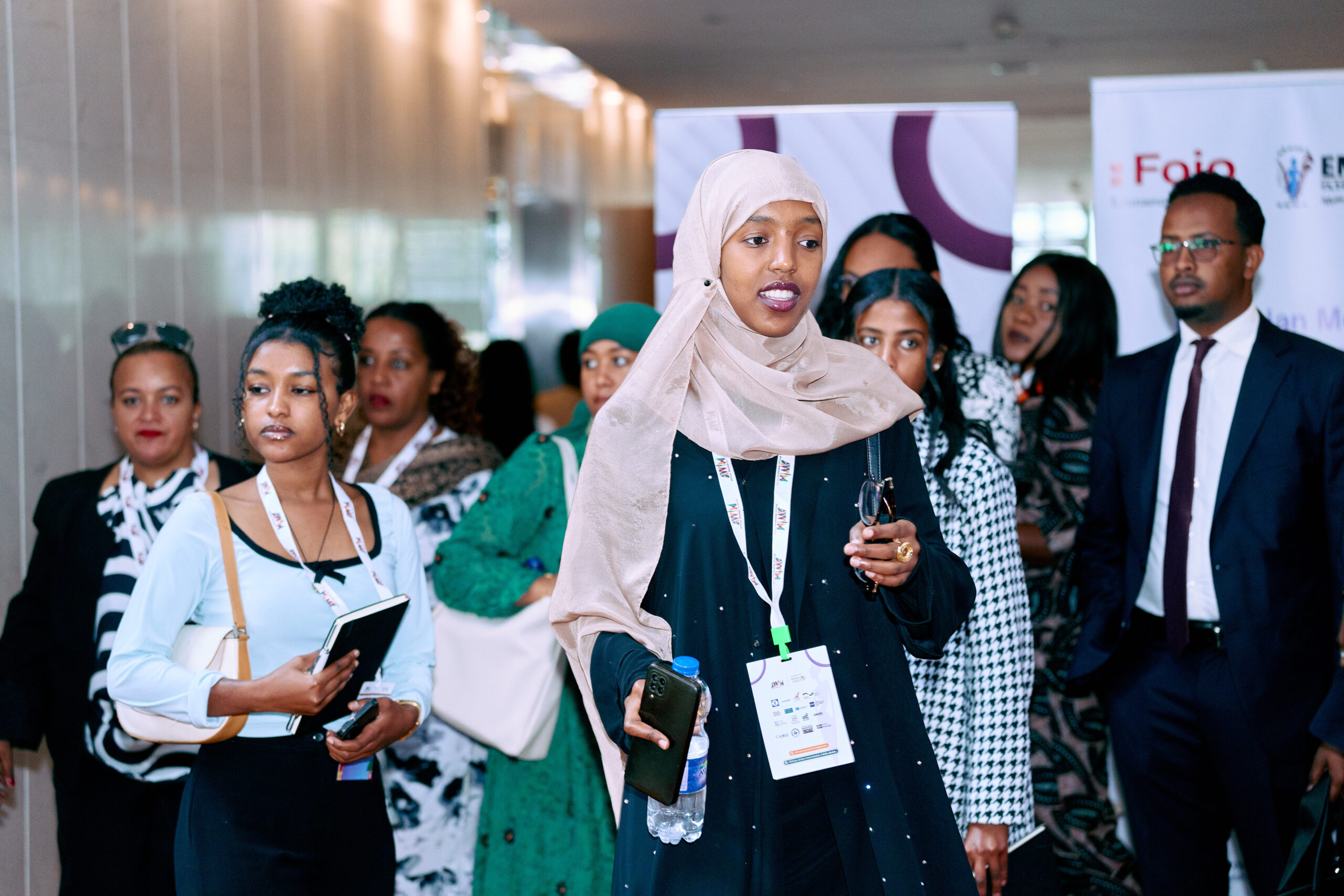
Equip them early enough to navigate social media, influence culture, misinformation, not just to chase views or money, but to understand what is worth speaking out about, and why. Let them know that integrity and sustainability do not have to be opposites, that you can still earn a living and tell the truth, that honesty is not naïve.
At Northwestern University in Qatar, she says, this belief underpins everything they teach. They call it storytelling because facts deserve form, and truth, to be understood, must move. But what they prioritise, above all, is evidence-based storytelling.
“There is always evidence,” she says. “Always.”
Narrative, in this framing, is how research breathes so journalism travels and accountability survives beyond reports and policy documents and conference rooms. Scheherazade speaks with the calm certainty of someone who has seen the cost of getting this wrong, and the quiet power of getting it right.
Our interview ends. “I think I’ve said everything,” she says, and thanks me. And we laugh.
But long after the conversation ends, it is her name that stays with me. Scheherazade, the woman of ancient lore who told stories for her very survival, who understood that narrative was strategy, that truth, told well enough, could hold back darkness for one more night.
This Scheherazade carries that inheritance lightly, but unmistakably.
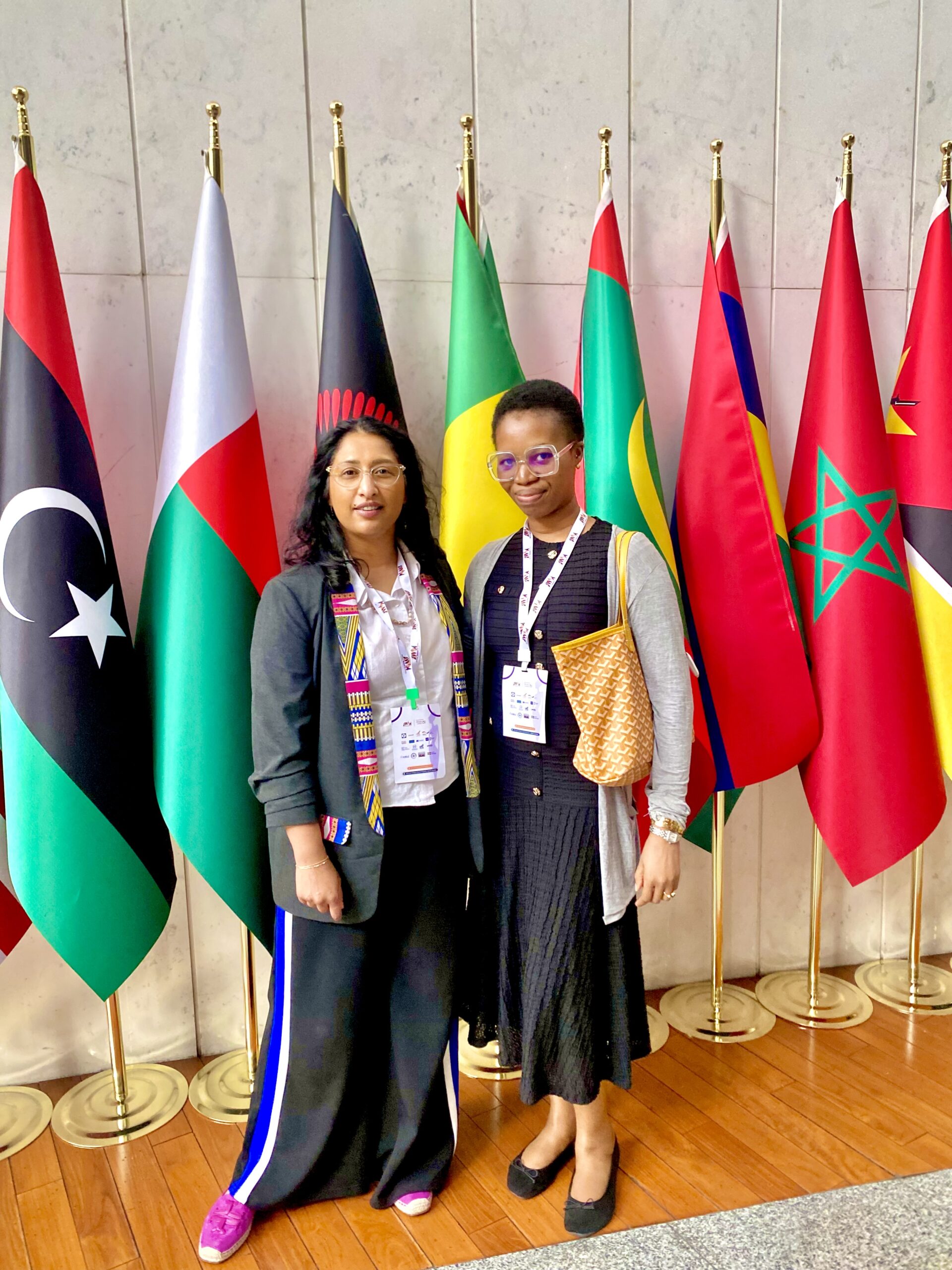
She didn’t rush off. I suggested we take a photo together, and we walked a short distance to the formal display of African Union member-state flags, rows of colour and fabric standing upright in ceremonial symmetry. We stood side by side, Scheherazade on the left, me on the right, both of us still wearing our AWiM25 badges, framed by the flags of the continent this conference had gathered to serve.
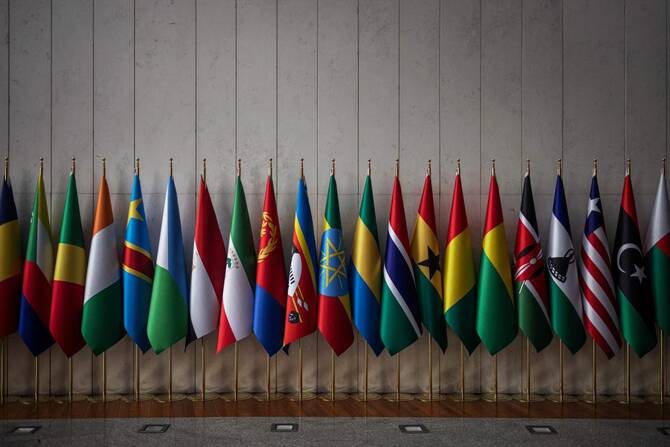
It felt fitting. A first meeting that did not announce itself as one. A conversation that happened in a pause rather than on an official stage. And a photograph taken as quiet proof of what AWiM25 made possible: proximity, generosity, and the rare ease of being taken seriously without being made to feel small.